
A safety switch usually trips because it has detected electrical current leaking from a circuit, appliance or piece of equipment. Common causes include faulty appliances, damaged wiring, moisture, deteriorated electrical components and faults in outdoor circuits. Occasional tripping may be linked to a particular appliance, but repeated or unexplained tripping should be investigated by a licensed electrician. A safety switch is designed to disconnect power quickly when a potentially dangerous fault is detected, so frequent tripping should never simply be ignored.
Safety switches can trip because of faulty appliances, damaged wiring, moisture entering electrical equipment, deteriorated components or faults within a circuit. Repeated tripping indicates that something requires attention and should be professionally assessed rather than repeatedly resetting the switch.
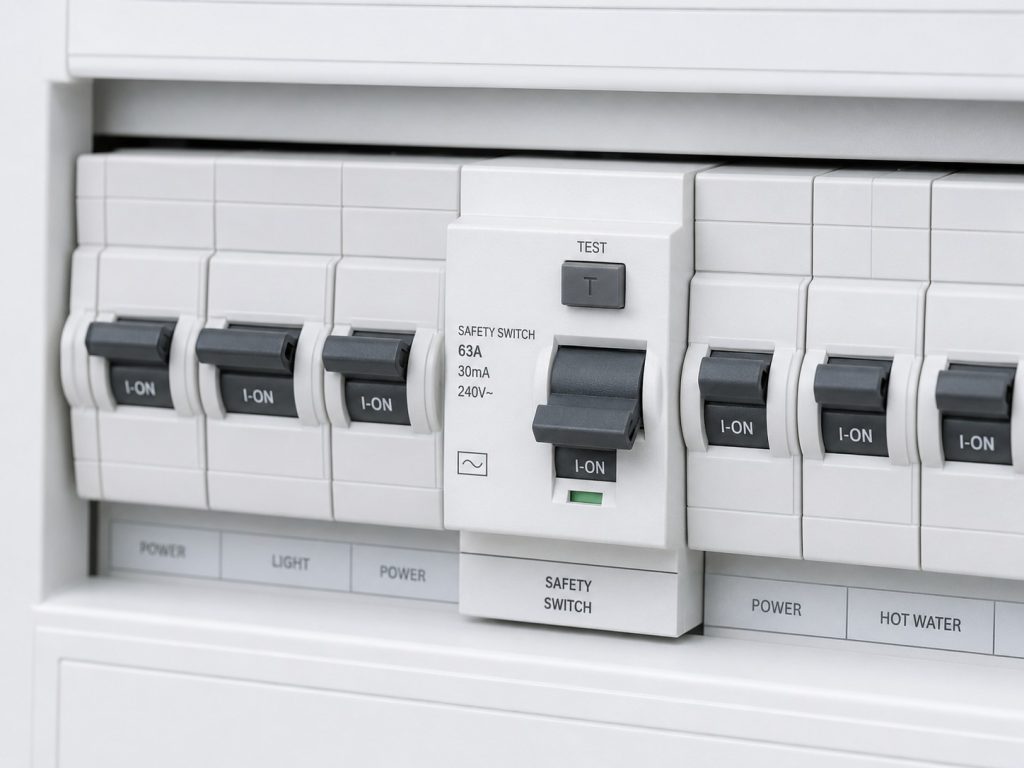
What Does a Safety Switch Actually Do?
A safety switch, also known as a residual current device (RCD), is an important part of your home’s electrical safety system. It monitors the electrical current flowing through a circuit and quickly disconnects the electricity when it detects current leaking to earth. This protection is designed primarily to reduce the risk of electric shock. When a safety switch trips, it is generally doing its job by responding to a fault or potentially unsafe electrical condition. For more information, read our guide to RCDs, circuit breakers and surge protectors.
Faulty Appliances Can Trigger Your Safety Switch
A faulty appliance is a common reason for safety switch tripping. Damage to an appliance, its internal components, plug or power lead can allow electrical current to leak. If the safety switch repeatedly trips when a particular appliance is connected or switched on, that appliance may require professional testing or repair. Avoid continuing to use electrical equipment that appears damaged or repeatedly causes electrical problems.
Damaged or Deteriorating Wiring
The problem may not always be an appliance. Wiring can deteriorate with age or become damaged through renovations, pests, heat, moisture or other environmental factors. Damaged insulation or connections can allow electrical current to leak, causing the safety switch to operate. Because much of a home’s wiring is concealed inside walls and ceilings, these problems are not always visible.
Moisture Around Electrical Equipment
Water and electricity are a dangerous combination. Moisture entering outdoor power points, light fittings, appliances or other electrical equipment can create leakage current and cause a safety switch to trip. If tripping happens during or after heavy rain, an outdoor electrical fitting or circuit may require inspection. Bathrooms, laundries and other damp areas can also require investigation where electrical faults are suspected.
Problems with Outdoor Circuits
Outdoor electrical systems face harsher conditions than indoor installations. Rain, humidity, insects, dirt and general weather exposure can affect fittings and connections over time. Outdoor lighting, power points and other connected equipment may therefore be responsible for intermittent safety switch tripping. Properly rated equipment and professional installation help protect outdoor circuits from environmental conditions.
Why Does It Sometimes Trip Randomly?
Intermittent faults can be particularly frustrating because the safety switch may operate normally for days or weeks before suddenly tripping again. These faults can be caused by moisture, deteriorating insulation, appliances that only develop a fault under certain operating conditions or several items contributing leakage current to the same protected circuit. Electrical testing may be needed to locate the source.
Should You Keep Resetting a Tripping Safety Switch?
A safety switch can generally be reset after the cause of a fault has been removed, but repeatedly resetting one that continues to trip is not a solution. Persistent tripping indicates that the underlying problem has not been resolved. If the switch will not remain on, there is a burning smell, equipment appears damaged or you are unsure what is causing the problem, stop using the affected equipment and arrange for a licensed electrician to investigate.
Could Your Switchboard Need Attention?
Repeated electrical problems can sometimes indicate that the wider electrical installation needs assessment. Older switchboards may have ageing components or may not provide the arrangement of circuit protection expected in a modern home. A licensed electrician can inspect the switchboard, safety switches and associated circuits to determine what is causing the problem and whether repairs or upgrades are appropriate. You can also learn more about common electrical issues caused by old switchboards.
Don’t Ignore a Safety Switch That Keeps Tripping
A tripping safety switch can be inconvenient, but it is also an important warning that should be taken seriously. Whether the cause is an appliance, damaged wiring, moisture or another electrical fault, identifying the problem helps keep your home’s electrical system safe and reliable. Airmelec provides electrical fault finding and switchboard services to help homeowners identify electrical problems and determine whether repairs, safety improvements or a switchboard upgrade may be required.