
Table of Contents
- How to Compare the Best Air Conditioning Brands for Homes
- Ducted vs Split System Air Conditioning: Which Suits Your Home?
- The Real Cost of Air Conditioning Installation
- Air Conditioning Maintenance Tips That Extend System Life
- Health, Air Quality and Solar Integration Features
- Installation Pitfalls and How to Vet a Contractor
- Frequently Asked Questions
Last Updated: September 12, 2026
How to Compare the Best Air Conditioning Brands for Homes
Choosing between the best air conditioning brands for homes comes down to three things: the energy efficiency rating on the label, compressor quality, and correct sizing for your rooms. Get those right and running costs stay predictable for a decade or more.
Homeowners who compare star ratings and compressor type before buying often end up far happier than those who shop on price alone. Below, we’ll show you how to read the specs that matter and where most buyers get caught out.
The market has shifted: reverse cycle systems now do the heavy lifting year-round, and smart home integration has become a genuine running-cost tool. But most buying guides rank brands when they should teach you to read specifications.
Star Ratings and Running Costs
The energy efficiency rating is the single best predictor of running cost. In Australia, air conditioners carry a star rating under the Zoned Energy Rating Label, which rates cooling and heating separately for different climate zones. A higher star rating means less power for the same cooling capacity.
Two systems with identical cooling capacity can differ substantially in annual running cost. That gap compounds over a system’s life, which is why a slightly dearer unit with a better star rating often works out cheaper overall. Check the Energy Rating website’s Zoned Energy Rating Label guide to compare models on like-for-like settings rather than showroom impressions.
Inverter Technology and Compressor Quality
Inverter technology lets the compressor vary its speed instead of switching fully on and off, giving steadier temperature control, quieter operation, and lower power consumption once the room reaches its set point.
Compressor quality separates the tiers of the market. A well-built inverter compressor holds its efficiency for years; a cheap one loses it quietly. When comparing air conditioning brands, ask what compressor the unit uses and what warranty period covers it. That single question tells you more than any badge on the front panel.
Ask to see the Zoned Energy Rating Label for your specific climate zone, not the national average figure. A model that performs well in one zone can be mediocre in another, and sales staff rarely volunteer the distinction.
Ducted vs Split System Air Conditioning: Which Suits Your Home?
A split system cools one room or zone and suits most established homes, while ducted air conditioning conditions the whole house through ceiling or floor vents. The right choice depends on your floor plan, how many rooms you actually use, and whether you want room-by-room control.
Split systems win on upfront cost, installation simplicity, and running efficiency when you only need one or two rooms comfortable. Ducted systems win on whole-home coverage and looks, but cost more to install and run if you cool unused rooms.
| Factor | Split System | Ducted System |
|---|---|---|
| Best for | Single rooms, retrofits | Whole-home, new builds |
| Upfront cost | Lower | Higher |
| Zoning control | Per unit | Per zone |
| Running cost | Lower if used selectively | Higher across whole home |
| Installation disruption | Minimal | Significant |
Sizing Comes Before Brand Choice
Most undersized systems are sold, not bought. A unit that’s too small runs near-continuously, never reaches set point on hot days, and loses efficiency faster because the compressor never rests. One that’s too large short-cycles, which is worse for humidity control and hard on the compressor.
The rough rule of thumb is about 125 watts of cooling capacity per square metre in a well-insulated room with average ceiling height, adjusted upward for west-facing glass, uninsulated ceilings, or open-plan layouts. A 20 m² bedroom lands near 2.5 kW; a 40 m² open living area near 5 kW. Treat that as a starting point, a proper heat-load assessment accounts for window area, orientation, insulation, and occupancy.
How Zoning Actually Works
Ducted systems are sold on zoning, but zoning only saves money if the zones match how you live. A typical install divides the home into two to four zones, each with its own damper and controller. If every zone is open, you’re paying to condition the whole house; group bedrooms into one zone and living areas into another, and you can run the living zone by day and the bedroom zone at night.
Split systems achieve the same outcome differently: one head per room, switched off when empty. For a household using two or three rooms regularly, multiple splits often beat ducted on running cost because there’s no duct loss, ducted systems lose conditioned air through roof-space ductwork, particularly in older homes.
The Long-Term Cost View
Purchase price is the smallest part of the decision over a system’s life. A ducted system that costs more upfront but zones well and carries a high star rating can undercut a cheaper split setup over five to ten years once energy and servicing are counted. The reverse is also true: ducted run with all zones open in a house where two rooms are occupied costs more than three well-chosen splits.
A practical way to frame it: estimate annual running cost from the Zoned Energy Rating Label for your climate zone, multiply by the years you expect to own the system, then add servicing and an allowance for one repair. Compare that total against the purchase and installation figure, the lower lifetime number is usually the better buy, even when the sticker price is higher.
Ask the installer to show you the zone layout on paper before signing. If the zones don’t match your daily routine, daytime living, nighttime bedrooms, the system will be run wide open and the efficiency advantage disappears.
For a granny flat or new build, ducted is often the cleaner long-term answer because the ductwork goes in before ceilings are lined. For an older home with solid walls and no roof cavity access, split systems avoid structural work and can be staged room by room as budget allows.
The Real Cost of Air Conditioning Installation
Installation cost is where quotes diverge wildly, and it’s rarely about the unit itself. Labour, electrical work, and site conditions usually decide the final figure.
Pricing depends on your specific home, so any honest provider will assess before quoting. As a general guide, the factors below move the number most.
What Drives the Price Up or Down
- Number of indoor units: each head needs its own refrigerant run and drainage
- Electrical capacity: older switchboards may need an upgrade before a new circuit is added
- Wall and roof construction: double brick and tiled roofs take longer than weatherboard
- Run length: the further the outdoor unit sits from the indoor head, the more materials and labour
- Access: tight roof spaces and second-storey installs add time
- Removal of old systems: disposal and decommissioning of legacy units
A quote that’s dramatically cheaper than the rest usually means something is missing: no electrical assessment, no allowance for switchboard work, or unlicensed labour. The correction cost lands on you later, and it can void your warranty.
Air Conditioning Maintenance Tips That Extend System Life
Regular maintenance is the cheapest way to protect a system you’ve already paid for. Most breakdowns trace back to skipped servicing rather than manufacturing faults, and neglect compounds quietly through higher power bills before it shows up as a repair.
What a Proper Service Actually Involves
A service isn’t just a filter rinse. A professional technician will:
- Clean or replace air filters, and check the indoor coil for dust build-up
- Wash the outdoor coil and clear debris, leaves, and vegetation from around the unit
- Check refrigerant pressures and look for slow leaks
- Test the condensate drain and flush any blockage
- Inspect electrical connections, capacitors, and the isolator
- Verify the thermostat or controller is reading accurately
- Run the system in both cooling and heating modes to confirm changeover
If a service quote doesn’t include the outdoor coil and the drain, it’s a filter change, not a service.
Service Intervals That Match How You Use the System
Manufacturers typically recommend servicing every 12 months for a residential system. In practice, the interval should shift with use and environment:
- Standard household, moderate use: annual service before summer
- Dusty or rural settings, or homes near construction: filters checked every 4-6 weeks, professional service every 6-12 months
- Coastal properties: annual service with extra attention to the outdoor coil, which corrodes faster in salt air
- Homes running the system daily through summer and winter: annual service, plus a mid-season filter clean
- Pet households: filters every 4-6 weeks, because hair and dander load the coil faster
The Cost of Skipping It
A dirty filter restricts airflow, which drops the evaporator coil temperature, causing it to ice over and forcing the compressor to work harder for less cooling. That sequence is how a $200 service becomes a $1,500 repair. A blocked condensate drain causes water damage to ceilings and walls, a building repair, not an appliance repair.
A system running with a clogged filter and fouled outdoor coil draws more power for the same output, and over a season that gap is measurable on your bill. A well-maintained system holds its efficiency rating far longer, which is why servicing belongs in any long-term cost-of-ownership calculation rather than being treated as optional.
- Clean or replace air filters every few months, more often in dusty areas
- Clear vegetation and debris around the outdoor unit for airflow
- Book a professional service before summer, not during the first heatwave
- Check drainage lines for blockages that cause water leaks
- Keep the thermostat at a steady setting rather than constant large swings
A well-maintained system holds its efficiency rating far longer. The Australian Government’s energy.gov.au guidance on heating and cooling recommends sensible thermostat settings and zoning to cut power consumption without sacrificing comfort.
Servicing costs a fraction of a repair. A system serviced annually typically outlasts an identical neglected unit by years, and it keeps running closer to its rated efficiency. Budget the service as a fixed annual cost, not a contingency, and the lifetime numbers can look very different.
Health, Air Quality and Solar Integration Features
Modern systems increasingly double as air quality tools. Higher-end units offer multi-stage air filtration, and some accept HEPA-grade filters that capture fine particulates, which matters for households dealing with allergies, asthma, or smoke events.
Reverse cycle heating mode means one system handles winter and summer, simplifying both maintenance and your electricity planning. Eco-mode and timer settings let you run the system around your solar generation rather than against it.
Solar integration is the angle most buying guides skip. If you have rooftop solar, running your air conditioner during peak generation hours, rather than in the evening, changes the economics entirely. A system with good timer settings and remote control makes that scheduling practical rather than fiddly.
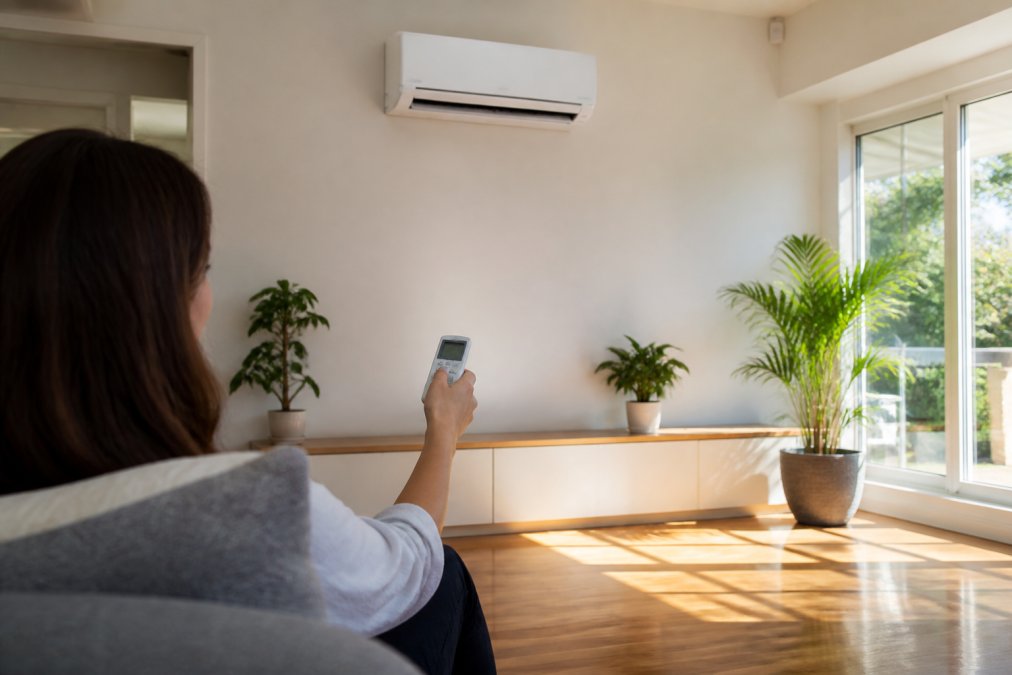
Households with rooftop solar that want to shift cooling and heating into daylight generation hours, using timer settings and eco-mode to cut grid draw.
Installation Pitfalls and How to Vet a Contractor
The most expensive mistakes in air conditioning happen before the unit is switched on. Poor installation, undersized units, and unlicensed electrical work cause most of the problems that require fixing.
Vetting a contractor comes down to licences and evidence. Ask for the electrical licence number, confirm refrigerant handling credentials, and check the work is covered by warranty. A licensed refrigeration mechanic and electrician should handle every part of the job, including the electrical circuit.
Contractor vetting checklist:
- Current electrical licence number provided in writing
- Refrigerant handling accreditation confirmed
- Written quote itemising unit, labour, and electrical work
- Warranty period stated for both parts and labour
- After-sales service and callout process explained
- Evidence of insurance and relevant certifications
The Fair Trading NSW guidance on hiring tradespeople and checking licences sets out what a consumer is entitled to verify before work begins. Use it. A contractor who hesitates to provide a licence number is telling you something.
Financing is the other piece. Energy-efficient upgrades can be financed through programs such as the NSW Government’s Home Energy Saver loan, which Airmelec is an approved installer for, and through 0% interest options via Brighte. Check current eligibility and terms directly, as program details change.
Comparing air conditioning brands is really a test of how well you read specifications, not how many names you can recite. Star ratings, compressor quality, sizing, and installation standards can decide whether a system saves you money or drains it.
Airmelec provides licensed refrigeration mechanics and electricians, and flexible finance through 0% interest Brighte options and the Home Energy Saver loan program. Get started with Airmelec and get a system sized, installed, and serviced to perform. Get A Quote Today.
Frequently Asked Questions
Which air conditioning brand is most reliable in Australia?
Reliability depends more on correct sizing, professional installation and regular servicing than on the badge alone. Look for brands with long warranty periods, widely available spare parts and a strong after-sales service network. Inverter technology and quality compressors also reduce wear over time. A licensed technician can advise which models suit your climate and home layout, and how to keep the system running efficiently for years.
What should I look for when choosing an air conditioning brand?
Check the energy efficiency rating and star rating, confirm the unit uses inverter technology, and compare noise levels in decibels for bedrooms. Ask about warranty period, after-sales service and whether the brand supports smart home integration and Wi-Fi control. Also confirm the installer is licensed and experienced with that brand. A good installation matters as much as the brand itself.
What is the difference between ducted vs split system air conditioning?
A split system has an indoor head in each room and suits single rooms or small homes. Ducted air conditioning runs through ceiling or floor vents and conditions the whole house from one central unit. Ducted costs more to install and run but offers even climate control and hidden hardware. Split systems are cheaper upfront and easier to add room by room. The right choice depends on your floor plan, budget and how many rooms you need to cool.
Do I need a licensed technician to install my air conditioner?
Yes. Air conditioning installation involves refrigerant handling and electrical work, both of which require licensed tradespeople. In Australia, refrigerant work must be done by a technician holding the appropriate licence, and electrical connections must be completed by a licensed electrician. Using an unlicensed installer can void your warranty, risk your home insurance and create safety hazards. Always ask for licence details before work begins.