
Table of Contents
- Why Homeowners and Businesses Look for Contracting Alternatives
- Quick Comparison: Top Contracting Alternatives in the Hawkesbury Region
- Airmelec: Locally Owned HVAC, Electrical, and Refrigeration Specialists
- Buildxact: Estimating Software for Australian Residential Builders
- Houzz Pro: Marketing and Client Management for Renovation Professionals
- Contractor Foreman: All-in-One Management for Trade Contractors
- JobTread: Job Costing and Financial Transparency for Builders
- How to Choose a Reliable Tradesperson for Your Next Project
- Frequently Asked Questions
Last Updated: September 18, 2026
Why Homeowners and Businesses Look for Contracting Alternatives
Search interest in best Hawkesbury Contracting alternatives keeps climbing, and the reason is rarely price. Locals want certainty, not “someone cheaper.”
Quick Comparison: Top Contracting Alternatives in the Hawkesbury Region
The key distinction is whether you need someone to do the work or someone to help a trade run their business. Most “alternatives” lists blur the two.
First, decide which problem you have
- You need work done on your property. You’re hiring a licensed trade or coordinated team. You care about licence class, insurance, response time, and written scope.
- You are a trade or builder needing better tools. You’re buying software. You care about subscription cost, Australian supplier integration, and fit with how you quote.
Homeowners: only the first category applies. The software rows below are context, not options you can hire.
Comparison table
| Option | Who it’s for | Type | Pricing model | Typical cost signal |
|---|---|---|---|---|
| Airmelec | Homeowners and small businesses needing HVAC, electrical, or refrigeration work | Local licensed trade service | Quote-based | Free quote; job cost depends on scope and system |
| Buildxact | Australian residential builders | Estimating and project management software | Subscription | Monthly subscription; confirm current tiers with vendor |
| Houzz Pro | Renovation and design professionals | Marketing and client management software | Subscription, free tier available | Free tier; paid tiers scale with features |
| Contractor Foreman | Small to medium trade contractors | All-in-one management software | Subscription | From around $49 per month; confirm current rate |
| JobTread | Builders focused on job costing | Financial management software | Subscription | Contact vendor for current figure |
How to read this table
Row 1 is the only row a homeowner can act on directly. Airmelec is a licensed trade service, you request a quote, they attend your property, and they carry the licences and insurance. The rest are software subscriptions sold to trades.
- Slow, mispriced estimating: Buildxact, its Australian supplier price lists reduce manual correction.
- Losing work in the client relationship: Houzz Pro, whose strength is the client-facing side, not the numbers.
- Broad operational coverage at a lower entry price: Contractor Foreman bundles the most features per dollar, with a busier interface.
- Not knowing your margin until the job is over: JobTread, with a steeper learning curve if you’re not financially minded.
What to expect to pay
Pricing transparency is where most comparison pages stop short. Here is the honest position:
- Hireable trade work is quoted per job, not per hour, for defined scopes. A switchboard upgrade, a split system install, and a full refrigeration service are priced differently because the labour, parts, and compliance work differ. Request a written quote with inclusions and exclusions rather than relying on a headline rate.
- Trade software is almost always subscription-based, billed monthly or annually, with tiers gated by user count or feature access. Entry tiers for small operators commonly sit in the tens of dollars per month; fuller platforms sit higher. Always confirm current pricing directly with the vendor, because tiers change.
- Finance options can change the effective cost of trade work. Airmelec is an approved installer under the NSW Government’s Home Energy Saver program and offers 0% interest finance through Brighte, which spreads the cost of energy-efficient upgrades rather than requiring upfront payment.
Decision shortcuts
- Homeowner, urgent fault: call a licensed trade with stated after-hours availability; confirm the call-out fee first.
- Homeowner, planned upgrade: get two written quotes using the same scope.
- Homeowner, renovation: confirm which trades are licensed in-house versus subcontracted, then check each licence.
- Trade, pricing pain: start with an estimating tool before an all-in-one platform.
- Trade, cashflow pain: start with a job costing tool before a marketing tool.
If you are a homeowner, ignore every software row on this page. You cannot hire a subscription. Focus on licence class, insurance, written scope, and pricing model, the four things that actually determine whether your job goes well.
Airmelec: Locally Owned HVAC, Electrical, and Refrigeration Specialists
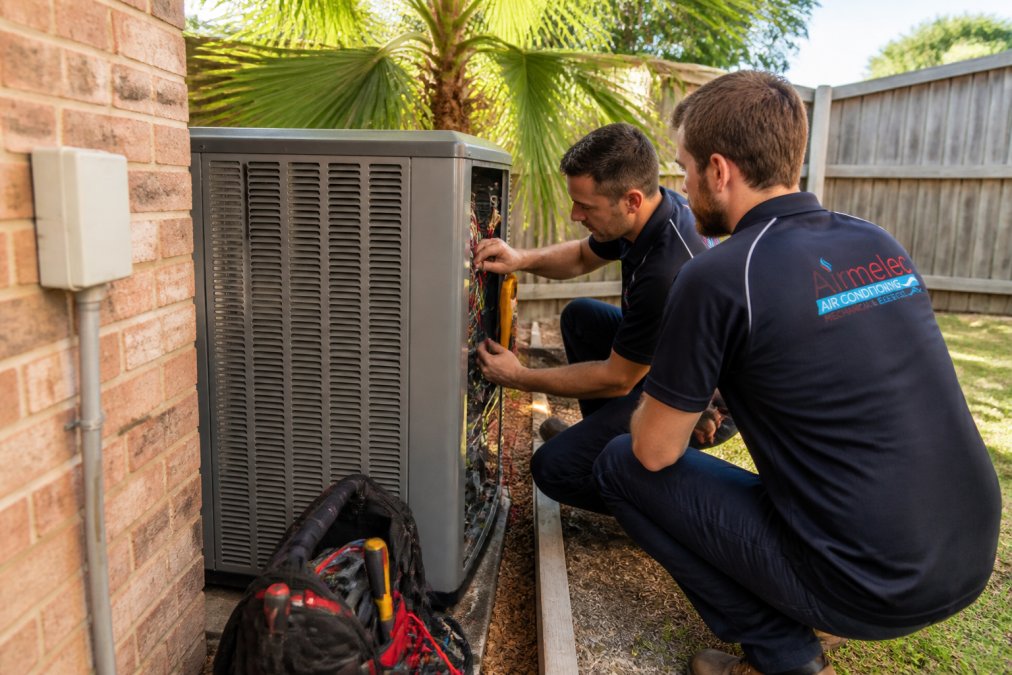
For anyone who needs actual work done on their property, Airmelec is the strongest option on this list. The locally owned business has fully licensed refrigeration mechanics and electricians handling installations, repairs, maintenance, and energy-efficient upgrades.
Key Features and Services
- Air conditioning installation, servicing and repair
- Refrigeration diagnostics
- Electrical work including upgrades and safety inspections
- Security system installation
- Energy-efficient system upgrades
One practical advantage: because the team covers both electrical and HVAC, a granny flat build or renovation doesn’t need two contractors coordinating schedules, removing a common source of delay.
Pricing and Finance Options
Airmelec is an approved installer under the NSW Government’s Home Energy Saver program, which helps households fund energy-efficient upgrades. The business also offers 0% interest finance options through Brighte, so a system replacement doesn’t have to be paid upfront. Exact costs depend on your property and system, so request a quote for current pricing.
Pros and Cons
Pros:
- Licensed electricians and refrigeration mechanics in-house
- Handles electrical and HVAC on the same project
- Finance options reduce upfront cost
- Local to the region
Cons:
- Quote-based pricing means you need to make contact before budgeting
When you request a quote, ask for the licence number and the scope of work in writing. A written scope is what protects you if a job changes midway, and it makes comparing two quotes far easier.
Buildxact: Estimating Software for Australian Residential Builders
Buildxact is cloud-based estimating and project management software built for the Australian residential construction market, the most locally relevant option here for builders.
Key Features
- Digital take-offs and automated estimating
- Integration with Australian supplier price lists
- Client-facing quote generation
- Project scheduling and variation management
The local supplier integration is the standout: overseas price lists force manual adjustment of every line, while Buildxact’s Australian focus means fewer corrections before a quote goes out.
Pricing Model
Buildxact uses a subscription model. Contact the vendor directly for current pricing tiers.
Pros and Cons
Pros:
- Aligned with Australian building standards and suppliers
- Meaningful time savings on estimating
- Handles variations cleanly
Cons:
- Limited design features compared with visual-heavy platforms
- Subscription cost needs justifying if you quote infrequently
Houzz Pro: Marketing and Client Management for Renovation Professionals
Houzz Pro targets residential contractors and interior designers who need to win work and manage client relationships, not just price jobs.
Key Features
- Lead management and CRM tools
- Estimating and proposal generation
- Client collaboration portals
- 3D floor planner and mood board tools
Pricing Model
Houzz Pro offers a free tier with paid subscriptions above it. Contact the vendor for current rates.
Pros and Cons
Pros:
- Strong visual marketing integration
- Client-facing documents are easy to produce
Cons:
- Advanced features sit behind higher-tier subscriptions
Contractor Foreman: All-in-One Management for Trade Contractors
Contractor Foreman bundles more than 35 features, scheduling, time tracking, daily logs, into one platform for small to medium trade contractors wanting broad coverage at a competitive price.
Key Features
- Scheduling and time card tracking
- Integration with QuickBooks and Xero
- Mobile app for field technicians
- Document management and digital signatures
Pricing Model
Subscriptions start from $49 per month. Confirm current rates with the vendor.
Pros and Cons
Pros:
- Extensive feature set for the price
- Strong field-to-office communication
Cons:
- The interface feels cluttered because of the feature volume
JobTread: Job Costing and Financial Transparency for Builders
JobTread is built around job costing and financial accuracy, for contractors who care more about knowing their margin than managing a schedule.
Key Features
- Real-time job costing and budget tracking
- Automated purchase orders and change orders
- Vendor and subcontractor portals
- Profitability reporting
Pricing Model
JobTread uses subscription pricing. Contact the vendor for a current figure.
Pros and Cons
Pros:
- Excellent financial tracking
- Automation cuts manual data entry
Cons:
- Steeper learning curve for users without a financial background
Software won’t fix a pricing problem. If your quotes are consistently unprofitable, a job costing tool will show you the loss faster, not prevent it. Fix your rates first, then automate.
How to Choose a Reliable Tradesperson for Your Next Project
Most guides tell you to check a licence and ask for a quote, correct but useless on its own, because it doesn’t help you tell two licensed, insured, well-reviewed trades apart. The real differentiator is matching the type of contractor to the type of job, then testing their pricing model before you commit.
Step 1: Match the contractor type to the job
“Contractor” is not one trade. Hiring the wrong category is the most common and most expensive mistake.
| Job type | Who you actually need | What to check |
|---|---|---|
| Switchboard upgrade, new circuits, fault finding | Licensed electrician | Individual electrical licence, not just a company registration |
| Split system or ducted install, refrigeration repair | Licensed refrigeration mechanic with electrical authorisation | ARCtick refrigerant handling licence plus electrical licence |
| Granny flat, extension, structural change | Licensed builder or registered building practitioner | Builder licence class that covers residential work, plus Home Building Compensation cover where required |
| Bathroom or kitchen renovation | Trade-specific licensed trades, coordinated by a builder or project manager | Each trade’s own licence, plus a single written scope covering all of them |
| Emergency after-hours fault | Trade with stated 24/7 availability | Confirm call-out fee and after-hours rate before they attend |
Step 2: Verify the licence properly
In New South Wales, electrical and refrigeration work must be carried out by a licensed individual, and you can verify a licence through the NSW Fair Trading licence check. Search the individual’s name and licence number, not just the business name, a company can be registered while the person on your roof is unlicensed.
Step 3: Read the insurance certificate, don’t just ask for it
Ask for a certificate of currency for public liability cover and check three things: the policy is current, the cover amount suits the job size, and the named insured matches the business quoting you. A certificate in a different entity’s name is a warning sign.
Step 4: Understand how they price before you compare numbers
Two quotes for the same job can differ by thousands because they use different pricing models, not because one is gouging.
- Fixed price. The contractor carries the risk of overruns. Best for well-defined jobs like a switchboard replacement. Highest headline number, most predictable.
- Time and materials. You pay for hours plus parts, often with a markup. Best for fault-finding where the cause is unknown. Cheaper if the job is simple, more expensive if it isn’t.
- Schedule of rates. A priced list of common tasks, agreed upfront. Common for maintenance contracts and property managers. Good for repeat work, harder to compare on a single job.
- Cost plus percentage. You see the supplier invoices and pay a management fee on top. Transparent but exposes you to cost overruns. Rare in residential, more common in larger commercial work.
Step 5: Interview with five questions
A short phone call filters out most of the risk. Ask:
- What is your individual licence number, and what class does it cover?
- Who is the named insured on your public liability certificate?
- Is this quote fixed price or time and materials, and what would trigger a variation?
- What is excluded, disposal, make-good, compliance certificates, after-hours rates?
- Who physically does the work, and are they licensed and insured the same way?
If any answer is vague, that is your answer.
Step 6: Check reviews for pattern, not praise
One five-star review proves nothing. Look for a consistent history over at least twelve months, reviews mentioning the type of job you’re hiring for, and how the business responds to negative reviews. A tradesperson who replies to a complaint with a specific resolution is lower risk than one with a perfect record and no engagement.
Use this checklist before you commit:
- Individual licence number provided and verified on the state register
- Licence class matches the work being quoted
- Certificate of currency sighted, current, and in the quoting entity’s name
- Home Building Compensation cover confirmed for residential building work where required
- Pricing model stated (fixed, time and materials, schedule of rates, or cost plus)
- Written scope with inclusions, exclusions, and variation triggers
- Compliance certificates and disposal costs addressed in writing
- Project timeline with start and completion dates
- Workmanship guarantee stated in writing
- At least two independent reviews from the past year that match your job type
The cheapest quote is rarely the cheapest job, but the most expensive quote is not automatically the safest either. Compare pricing models and scopes side by side, verify the individual licence, and confirm insurance is in the right name. Those three checks catch most of the risk before work starts.
Frequently Asked Questions
What should I look for when hiring a local electrical contractor?
Check for a current electrical licence, public liability insurance, and relevant experience with your type of project. Ask whether they handle both general electrical work and Level 2 ASP connections if you need a new supply. Look for transparent pricing, written quotes, and verified reviews. A locally owned operator like Airmelec can often provide faster response times for emergency repairs because they are based in the region.
How do I verify a contractor’s licence in New South Wales?
In New South Wales, you can check an electrician’s licence through the NSW Fair Trading online register. Search by name or licence number to confirm it is current and covers the work you need. For HVAC work involving refrigeration, ask for the relevant refrigerant handling licence. Always request a copy of the licence and insurance certificate before work begins. This step protects you from unqualified tradespeople and ensures compliance with building regulations.
Are there Level 2 ASP electrical contractors in the Hawkesbury region?
Yes, Level 2 ASP contractors operate in the Hawkesbury area. These accredited service providers can work on the network side of the connection point, including overhead and underground service lines, metering, and new connections. If you are building a granny flat or need a supply upgrade, you will likely need a Level 2 ASP. Confirm the contractor holds current accreditation with the relevant network operator before engaging them.
How can I compare quotes from local HVAC and electrical companies?
Request itemised quotes that break down labour, materials, and any permit or compliance costs. Check whether the quote includes a site inspection and a clear project timeline. Ask about workmanship guarantees and whether subcontractors will be used. Compare not just the total price but also the scope of work, response times for emergency repairs, and whether finance options are available. A lower quote may exclude necessary compliance work.
What are the benefits of choosing a local, family-owned contractor?
Local, family-owned contractors like Airmelec are based in the community. They tend to offer more personalised service, transparent pricing, and a reputation they need to maintain locally. You can also visit their premises or speak to neighbours who have used them.
Finding a contractor you can trust takes more effort than a directory search, but the payoff is a job done properly the first time. Airmelec handles air conditioning, refrigeration, and electrical work across the region with fully licensed technicians, in-house expertise across all three trades, and 0% interest finance through Brighte for eligible upgrades. Get a quote today and find out what your project actually needs.