
Table of Contents
- Common Refrigerator Noises and What They Mean
- Step 1: Check the Fridge Fan Making Loud Noise
- Step 2: Investigate Refrigerator Compressor Noise
- Step 3: Inspect Water Inlet Valve and Defrost Components
- Step 4: Level the Fridge and Secure Loose Panels
- DIY Repair Difficulty Ratings
- Preventative Maintenance Schedule
- When to Call a Refrigeration Technician
- Frequently Asked Questions
Last Updated: September 23, 2026
Common Refrigerator Noises and What They Mean
A refrigerator making strange noise causes confusion for most homeowners, but the sound itself is often the best clue. This guide from Air Conditioning & Electrical breaks down each noise so you can find the fault fast. Most fridge sounds come from a handful of parts: the compressor, the fans, the water inlet valve, and the defrost system.
Normal Sounds You Can Ignore
A healthy fridge is never silent. It hums, clicks, and gurgles as it runs.
- Humming: the compressor running as it should
- Clicking: the thermostat or defrost timer switching
- Gurgling: refrigerant moving through the coils
- Popping or cracking: thermal expansion of plastic and metal
Sounds That Signal a Fault
Loud or constant noises usually point to a worn part.
- Rattling or vibration: loose panels or an unlevel fridge
- Buzzing: a failing fan motor or valve
- Squealing: a worn fan blade or motor bearing
- Loud knocking: compressor trouble
Step 1: Check the Fridge Fan Making Loud Noise
A fridge fan making loud noise is one of the most common complaints, and it’s usually the easiest to fix. There are two fans in most fridges: the evaporator fan inside and the condenser fan at the back.
Evaporator Fan Problems
The evaporator fan sits inside the freezer and moves cold air into the fridge.
- Ice buildup on the blade causes a scraping sound
- A worn motor gives a constant buzz
- A loose mounting bracket makes it rattle
Condenser Fan Motor Issues
The condenser fan sits near the compressor at the back. It cools the condenser coils.
- Dust and pet hair clog the blade and cause vibration
- A failing motor hums loudly or squeals
- A bent blade thumps with each turn
Step 2: Investigate Refrigerator Compressor Noise
Refrigerator compressor noise is the sound most people worry about, and rightly so. The compressor is the heart of the sealed system, and it is the priciest part to replace. A healthy compressor hums at a steady, low level that fades into the background. When this steady hum shifts into erratic clicking or persistent grinding, it often serves as one of the primary refrigerator replacement signs that indicate the unit has reached the end of its reliable service life.
What the Compressor Actually Does
The compressor pumps refrigerant through the sealed circuit. It draws low-pressure gas from the evaporator, compresses it, and pushes it to the condenser coils, where it releases heat. When the compressor struggles, the whole cooling cycle suffers, the fridge runs longer, gets warmer inside, and makes more noise doing it.
Why Compressors Get Noisy
- Worn internal bearings or valves: the piston or scroll mechanism loses tolerance, producing a rhythmic knock or thud that syncs with each compression stroke
- A failing start relay or capacitor: the compressor tries to start, clicks, and trips, often a rapid click-click-click, then silence, then repeat
- Liquid slugging: refrigerant returns to the compressor as liquid rather than gas, causing a heavy banging or hammering sound
- Loose mounting grommets: the compressor sits on rubber feet; when these harden or crack, vibration transfers straight to the cabinet
Model-Specific Noise Profiles
Different fridge layouts fail in different ways, and the noise often points to the type:
- Top-freezer models: the compressor sits in a rear compartment; a knock here is usually internal wear or a failing relay
- Side-by-side models: the compressor is often at the bottom rear, and a rattle may actually be the condenser fan shroud vibrating against it
- French-door models: dual evaporators mean two fan motors and a more complex defrost cycle; a compressor knock here is often accompanied by poor cooling in one compartment only
Compressor vs. Start Relay: How to Tell Them Apart
This is the distinction most guides skip. A failing start relay is a cheap, replaceable part. A failing compressor is a sealed-system job.
- Clicking that repeats every few minutes, fridge stays warm: suspect the start relay or run capacitor first
- Loud knocking or banging while the compressor is running: suspect internal compressor wear
- Compressor hot to the touch, fridge not cooling, no click at all: suspect the compressor or the overload protector
Signs of Compressor Failure
Watch for these warning signs:
- Loud knocking or banging from the back of the fridge
- Repeated clicking as it tries and fails to start
- The fridge runs constantly but stays warm
- The back feels hot while the inside stays cool
- A burning smell near the rear compartment
If you spot these, stop and call a professional. Compressor work involves refrigerant, which is a licensed job. Never open the sealed system yourself.
Running a fridge with a failing compressor can burn out the motor and spoil your food. If you hear loud knocking or constant clicking, unplug the fridge and book a technician.
A repeated click with no cooling is more often a cheap start relay than a dead compressor. Get it tested before you assume the worst.
Step 3: Inspect Water Inlet Valve and Defrost Components
Two quieter parts can still make a racket: the water inlet valve and the defrost system. Both are easy to misdiagnose because their sounds overlap with normal operation.
Water Inlet Valve Malfunctions
The water inlet valve fills the ice maker and water dispenser. It is a solenoid valve, an electrical coil pulls a plunger open when the dispenser or ice maker calls for water.
When it fails, you may hear:
- A loud buzz or hum each time the dispenser runs, caused by a weak coil or a plunger that cannot seat properly
- A vibrating rattle from the valve body, often because the valve is loose against the cabinet
- A hammering sound when the valve snaps shut, known as water hammer, usually from high line pressure
Defrost Timer and Heater Failures
The defrost system melts frost off the evaporator coils on a timed cycle, typically every 6 to 12 hours, running for 15 to 30 minutes. During that window, the compressor and fans stop, the heater energises, and the timer advances.
Normal Defrost Sounds vs. Faults
This is where most people misread the noise:
- A soft click, then silence, then a faint sizzle or drip: normal defrost cycle
- A loud, sharp click that repeats and the fridge never returns to cooling: stuck or failed defrost timer
- A scraping or grinding that starts after a defrost cycle: ice has built up on the evaporator and is hitting the fan blade
- No defrost at all, with frost visible on the freezer back wall: failed heater, defrost thermostat, or thermistor
The Ice Maker Angle
An ice maker that runs dry or has a stuck fill arm can also buzz or grind. If the noise only happens when the ice maker cycles, isolate it by switching the ice maker off for a day. If the noise stops, the fault is in the ice maker or its inlet valve, not the fridge’s cooling system.
If you are unsure whether a sound is the defrost cycle or a fault, time it. A normal defrost runs for a short, predictable window. A fault repeats or never resolves.
Defrost faults rarely announce themselves as a single loud noise. They show up as ice buildup, poor cooling, and a fan that scrapes, so check the freezer back wall for frost as your first clue.
Step 4: Level the Fridge and Secure Loose Panels
Sometimes the fridge isn’t faulty at all. It’s just unlevel or loose. A fridge that rocks on its base will rattle and vibrate against the floor and walls.
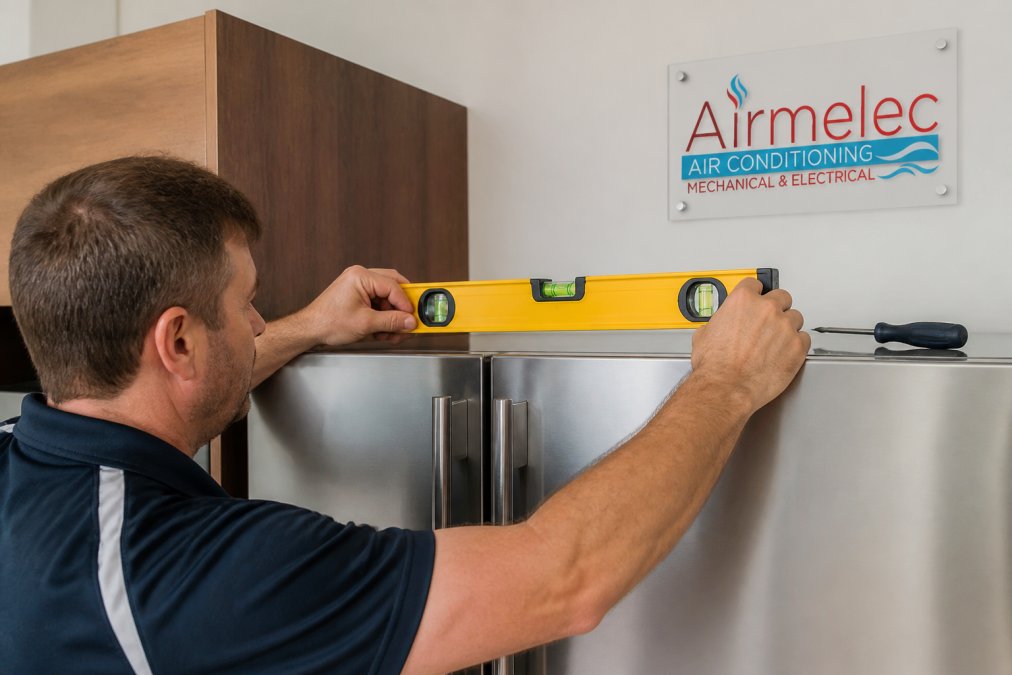
Here’s how to fix it:
- Check the level with a spirit level on top of the fridge
- Adjust the leveling legs by turning them to raise or lower each corner
- Tighten loose panels on the back and sides
- Check the drain pan underneath, which can vibrate if it’s loose
- Pull the fridge away from the wall to give the coils airflow clearance
DIY Repair Difficulty Ratings
Not every fix needs a technician. Here’s how the common jobs stack up.
| Fix | Difficulty | Best For |
|---|---|---|
| Levelling the fridge | Easy | Any homeowner |
| Securing loose panels | Easy | Any homeowner |
| Cleaning fan blades | Easy | Any homeowner |
| Replacing a fan motor | Moderate | Handy DIYers |
| Replacing water inlet valve | Moderate | Handy DIYers |
| Defrost timer or heater | Moderate | Handy DIYers |
| Compressor repair | Hard | Licensed technician only |
Preventative Maintenance Schedule
Stopping the noise before it starts beats any repair. A little upkeep goes a long way.
- Every month: check the door gasket seals and wipe them clean
- Every three months: vacuum the condenser coils and clear the drain pan
- Every six months: check the fan blades for debris and wear
- Once a year: pull the fridge out, check the level, and tighten the mounting brackets
Mark your maintenance dates in your phone. Fridges rarely warn you before a part fails, so a simple reminder keeps you ahead of the noise.
When to Call a Refrigeration Technician
Some noises are safe to ignore. Others need a licensed hand. Call a refrigeration technician when you hear:
- Loud knocking or banging from the compressor
- Constant clicking as the fridge tries to start
- A fan noise that won’t stop after cleaning
- Any sound tied to refrigerant or the sealed system
Frequently Asked Questions
Should I be concerned if my fridge is making noise?
Not always. Sounds like humming, gentle rattling or occasional clicking are often normal, caused by the compressor cycling or thermal expansion. However, loud buzzing, persistent rattling or grinding noises usually point to a mechanical fault. If the noise is new, getting louder or accompanied by poor cooling, it is worth investigating. Check for loose items first, then inspect the fan and compressor.
What does a bad compressor in a refrigerator sound like?
A failing compressor often produces a loud humming or buzzing that may be intermittent. You might hear a clicking sound as it tries to start, followed by silence when it overheats and shuts off. In some cases, a grinding or metallic knocking noise indicates internal wear. If you notice these sounds alongside the fridge not cooling properly, it is best to call a refrigeration technician.
What are signs of compressor failure in a refrigerator?
Signs include a fridge that runs constantly but does not get cold, a compressor that is hot to the touch, clicking sounds followed by no cooling, and higher than usual electricity bills. You might also notice the freezer working while the fridge section stays warm. If you suspect compressor failure, turn off the fridge and seek professional help.
Should I unplug my fridge if it’s making a loud noise?
If the noise is extremely loud, accompanied by a burning smell, or the fridge is not cooling, unplug it immediately. This prevents further damage or a potential safety hazard. For less severe noises, you can leave it running while you troubleshoot. If in doubt, unplug and call a licensed technician to diagnose the issue.
A strange noise from your fridge is a warning, not a nuisance. Ignore it, and a small part failure can turn into spoiled food and a costly repair. Air Conditioning & Electrical offers reliable diagnosis and repair of complex refrigeration systems, backed by fully licenced technicians and flexible 0% interest finance options through Brighte. Get a quote today and keep your fridge running quiet and cool.