
Table of Contents
- Common Causes of Fridge Failure: What You Need to Know
- Refrigerator Not Cooling Troubleshooting: Step-by-Step Diagnosis
- How to Clean Refrigerator Condenser Coils Properly
- Signs a Fridge Compressor Is Failing: Early Detection
- Other Critical Failure Points: Evaporator Fan, Defrost System, and Water Lines
- When to Replace vs Repair a Fridge: Making the Right Decision
- Preventative Maintenance to Avoid Future Failures
- DIY Safety Protocols and When to Call a Professional
- Frequently Asked Questions
Last Updated: October 4, 2026
Common Causes of Fridge Failure: What You Need to Know
When your refrigerator stops working, food spoils fast. A fridge breakdown isn’t just an inconvenience, it’s a crisis that needs immediate attention.
Most homeowners don’t realise how many moving parts work together to keep food cold. When one component fails, the entire cooling system can shut down. The good news is that many common causes of fridge failure are preventable with basic maintenance and early detection.
This guide walks you through the most common culprits, how to spot them, and when to call in the experts.
Why Your Fridge Stops Working
Your fridge relies on a continuous cycle to remove heat. When that cycle breaks, temperatures rise and food spoils. Understanding this cycle helps you understand what can go wrong.
The cooling process involves four key parts working in sync: the compressor, condenser coils, evaporator fan, and thermostat. If any one fails, the whole system fails.
The Cooling Cycle and Where It Breaks Down
Here’s how a fridge cools your food. The compressor pumps refrigerant through the system. That refrigerant travels to the condenser coils at the back of the unit, where it releases heat.
When the thermostat senses the temperature is warm enough, it signals the compressor to stop. When temperature rises again, the cycle restarts.
Any break in this chain stops the cooling. A faulty compressor won’t pump refrigerant. Dirty condenser coils can’t release heat. A blocked evaporator fan won’t circulate cold air.
Refrigerator Not Cooling Troubleshooting: Step-by-Step Diagnosis
A fridge that isn’t cooling is the most common complaint we hear. Before you assume the worst, check these three things yourself. Many problems are simple to fix.
Check the Thermostat Setting
Your thermostat controls when the compressor runs. If it’s set too warm, your fridge won’t cool properly.
Look inside your fridge. Find the dial or digital control. It should be set between 2°C and 4°C for the fridge compartment. If it’s higher, turn it down and wait 24 hours to see if temperatures drop.
Sometimes the thermostat itself fails. If you’ve adjusted the setting and temperatures still don’t drop, the thermostat may need replacement. This is a job for a professional.
Inspect Air Vents and Airflow
Cold air moves through vents from the freezer to the fridge. If these vents are blocked, warm air can’t reach your food.
Check the vents inside your fridge and freezer. Look for ice buildup, food packages, or debris blocking the openings. Clear any obstructions you find.
Also check the air vents at the back of the unit. Dust and lint can accumulate there. If vents are clogged, airflow stops and cooling fails.
Test the Door Gasket Seal
A damaged door gasket lets warm air leak inside. Your fridge then works harder to maintain temperature.
Close the door on a piece of paper. Try to pull the paper out. If it slides out easily, the gasket seal is weak. A proper seal should grip the paper firmly.
Look at the rubber gasket around the door frame. Check for cracks, tears, or hardening. If the gasket is damaged, it needs replacement. If it’s just dirty, clean it with warm soapy water.
How to Clean Refrigerator Condenser Coils Properly
Dirty condenser coils are the leading cause of cooling failure. These coils sit at the back or bottom of your fridge. Dust accumulates on them over time, blocking heat release.
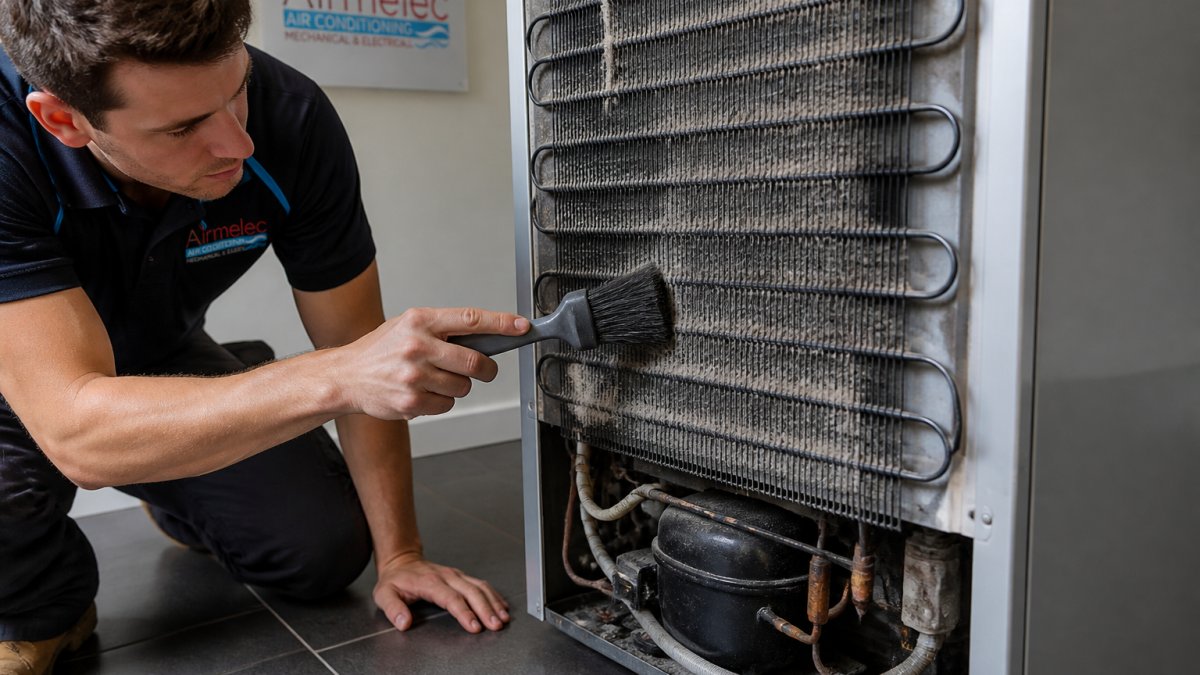
Why Dirty Condenser Coils Cause Cooling Failure
Condenser coils release the heat that refrigerant absorbs from your food. When dust covers these coils, heat can’t escape. The refrigerant stays warm, so your fridge can’t get cold.
This is why cleaning condenser coils often fixes a fridge that’s not cooling. It’s also why regular cleaning prevents failure in the first place.
Cleaning Process and Safety Precautions
Cleaning condenser coils takes 30 minutes. You’ll need a soft brush, vacuum, and a bit of care.
Step 1: Unplug the fridge. Never work on a plugged-in appliance.
Step 2: Locate the coils. Most fridges have coils at the back. Some models have them underneath.
Step 3: Brush away loose dust. Use a soft brush to gently loosen dust.
Do this every six months. Homes with pets or high dust levels should clean more often.
Never use water or liquid cleaners on condenser coils. Water can damage electrical components and create a shock hazard. Stick to dry brushing and vacuuming only.
Signs a Fridge Compressor Is Failing: Early Detection
The compressor is the heart of your fridge. When it fails, your fridge stops cooling. Catching early warning signs can save you money.
Noise, Temperature Fluctuation, and Cycling Problems
A failing compressor makes noise. You might hear clicking, humming, or grinding sounds. These aren’t normal. A healthy compressor runs quietly.
Temperature fluctuation is another red flag. Your fridge stays cold one day, then warm the next. This happens when the compressor struggles to maintain pressure.
Constant cycling is also a problem. The compressor starts and stops frequently instead of running in steady cycles. This means the compressor is working too hard to keep up.
Testing Compressor Function with Basic Tools
You can do a basic check yourself. Feel the back of your fridge where the compressor sits. It should be warm to the touch when running. If it’s cold or room temperature, the compressor isn’t working.
Listen carefully when the compressor runs. It should hum steadily. Clicking or grinding sounds mean internal damage.
If you suspect compressor failure, call a professional. Testing the compressor properly requires a multimeter and refrigeration knowledge. Attempting repairs yourself can be dangerous and void your warranty.
A faulty compressor almost always means replacement, not repair. Compressor failure is expensive, but it’s often the best option for older fridges that are near the end of their lifespan.
::: While stationary units often require total replacement, mobile cooling systems present unique power challenges that necessitate specific campervan fridge troubleshooting to determine if the compressor is truly beyond recovery.
Other Critical Failure Points: Evaporator Fan, Defrost System, and Water Lines
Beyond the compressor, several other components can fail and stop your fridge from cooling.
Faulty Evaporator Fan Motor and Frost Accumulation
The evaporator fan circulates cold air through your fridge. If it fails, cold air stays trapped in the freezer and your fridge warms up.
A broken evaporator fan is often the culprit when your freezer works but your fridge doesn’t. You’ll notice frost accumulation in the freezer.
Listen for the fan when the compressor runs. You should hear a quiet whirring sound. If it’s silent, the motor has likely failed. Replacing the evaporator fan is a job for a professional.
Defrost Timer and Water Inlet Valve Issues
The defrost timer controls when the defrost cycle runs. Without it, frost builds up on the evaporator coils. This frost blocks airflow and cooling fails.
The water inlet valve supplies water to your ice maker and water dispenser. If it clogs or fails, the system can’t function. More importantly, a stuck valve can leak water inside your fridge, causing electrical damage.
Both components require professional diagnosis and replacement. These aren’t DIY fixes.
When to Replace vs Repair a Fridge: Making the Right Decision
Sometimes repair makes sense. Sometimes replacement is smarter. Here’s how to decide.
Cost-Benefit Analysis and Age Considerations
A fridge older than 10 years is approaching the end of its life. Repair costs on older units often exceed 50% of replacement cost.
For fridges under 7 years old, repair is generally worthwhile. Parts are cheaper and the unit has years of life left.
Consider the specific repair. A thermostat replacement might cost less than a new fridge. A compressor replacement often costs more.
Also consider energy efficiency. Older fridges use more electricity. A new unit might cost more upfront but save money on power bills over time.
Environmental Impact and Disposal Options
Old fridges contain refrigerant and other materials that harm the environment if not disposed of properly. Many councils offer free collection of old appliances. Some retailers offer recycling when you buy a new unit.
Never dump an old fridge. It’s illegal and damages the environment. Contact your local council for disposal options.
When you buy a new fridge, ask the retailer about their old appliance removal service. Many include free collection and recycling in their delivery cost.
Preventative Maintenance to Avoid Future Failures
Regular maintenance prevents most fridge failures. Simple steps keep your unit running for years.
Monthly and Seasonal Maintenance Checklist
Monthly:
- Check the door gasket for damage or dirt
- Ensure vents aren’t blocked by food or debris
- Verify the temperature is set to 2-4°C
Quarterly:
- Clean the condenser coils (every 3 months in dusty homes)
- Wipe down the exterior and interior
- Check for unusual noises or smells
Annually:
- Inspect the water inlet valve for leaks
- Test the ice maker if you have one
- Listen to the compressor and evaporator fan during operation
Smart Fridge Connectivity and Modern Diagnostics
Modern fridges include temperature sensors and diagnostic systems. Some send alerts to your phone if temperature rises.
If your fridge has a digital display, check it regularly. It often shows error codes when something fails. Write down the code and search for it in your manual. Many codes tell you exactly what’s wrong.
Some smart fridges let you monitor temperature remotely. This is helpful if you’re away from home. You’ll know immediately if something goes wrong.
DIY Safety Protocols and When to Call a Professional
Some fridge repairs are safe for homeowners. Others require professional expertise. Know the difference.
Safe DIY tasks:
- Cleaning condenser coils
- Checking the door gasket
- Clearing blocked vents
- Adjusting the thermostat
Jobs for professionals:
- Replacing the compressor
- Repairing the evaporator fan
- Testing or replacing the thermostat
- Handling refrigerant
- Electrical repairs
Refrigeration systems contain pressurised refrigerant. Releasing it without proper equipment is dangerous.
Always unplug your fridge before attempting any repair. Never work on electrical components unless you’re trained.
Air Conditioning & Electrical has licensed technicians trained in refrigeration repair. If your fridge is acting up, we can help.
When your fridge stops cooling, you need answers fast. Food spoils quickly, and the stress of a broken appliance is real.
Frequently Asked Questions
How do I know if my fridge is going bad?
Watch for warning signs including unusual noises, temperature fluctuations, frost accumulation, or food spoiling faster than normal. If your fridge is not cooling properly, the compressor may be failing or the refrigerant system could be compromised. Check if the condenser coils are dirty, the door gasket seal is damaged, or air vents are blocked. These are the most common causes of fridge failure and are often fixable with cleaning or minor repairs.
Can a dirty condenser coil cause a fridge to fail?
Yes, dirty condenser coils are one of the leading causes of cooling failure. The coils release heat from the refrigerant during the cooling cycle. When dust and debris accumulate on them, the compressor works harder, cycles more frequently, and eventually may overheat or fail entirely. Cleaning the condenser coils regularly is essential preventative maintenance that can extend your fridge’s lifespan and restore cooling efficiency.
What should I do if my fridge stops cooling?
Start with refrigerator not cooling troubleshooting: check the thermostat is set correctly, ensure air vents inside the fridge are not blocked, and inspect the door gasket seal for damage. Clean the condenser coils if they appear dusty. If the compressor is running but the fridge is still not cold, the issue may be refrigerant loss or a faulty evaporator fan. If basic troubleshooting doesn’t work, contact a professional refrigeration technician for diagnosis.
When should I replace my fridge instead of repairing it?
Consider replacement if your fridge is over 10 years old and requires a major repair, such as compressor failure or refrigerant leak. Compare the repair cost to the price of a new unit. If the repair exceeds 50% of a replacement cost, replacement is usually more economical. Newer models are also more energy-efficient, which can lower your electricity bills. A professional can help you assess whether repair or replacement makes sense for your situation.