
Table of Contents
- What You’ll Need Before an Outage Hits
- How Long Food Lasts in Your Fridge Without Power
- How Long Food Lasts in Your Freezer Without Power
- Keeping Food Cold Without Electricity
- What to Throw Away After a Power Outage
- Preventing Food Spoilage During Extended Outages
- Assessing and Recovering Your Appliances After Power Returns
- Frequently Asked Questions
Last Updated: October 12, 2026
What You’ll Need Before an Outage Hits
Preventing food spoilage during outages starts long before the power goes out, so prepare while your systems are working normally.
Stock your freezer well. A full freezer keeps food safe longer because frozen items maintain cold temperatures. Aim to keep it at least three-quarters full, filling gaps with ice packs or frozen water bottles.
Keep appliance thermometers in both your fridge and freezer so you can check temperatures quickly after power returns and know whether food stayed safe.
Have a cooler ready with ice or ice packs before an outage strikes, so you can transfer perishables and buy extra time. Keep it in your coolest room, away from direct sunlight.
Stock shelf-stable foods that don’t need refrigeration, canned goods, dried pasta, nuts, and crackers, to take pressure off your fridge and freezer during extended outages.
Know your local emergency contact numbers. If you’re unsure whether food is safe, call your local health department or environmental health office for area-specific guidance.
How Long Food Lasts in Your Fridge Without Power
Refrigerated food stays safe for roughly four hours without power if you keep the door closed. This timeframe assumes your fridge was at the correct temperature before the outage began.
The key factor is keeping the door shut. Every opening lets warm air in and raises the temperature, so resist checking inside. Your fridge is an insulated box: the colder it was before the outage, the longer it holds that temperature.
After four hours, perishable items begin to enter the temperature danger zone where bacteria multiply rapidly (Food temperature and thermometers). This includes meat, poultry, fish, seafood, eggs, milk, yoghurt, cream, soft cheeses, and leftovers.
Certain foods last longer: butter, hard cheeses, and condiments like mayonnaise resist spoilage better, and fresh produce is more forgiving than raw meat or dairy.
Use your appliance thermometer to check the actual temperature. Below 4°C is safer; above it, especially after a few hours, you’re in riskier territory.
How Long Food Lasts in Your Freezer Without Power
A full freezer keeps food safe for roughly 48 hours without power; a half-full one manages about 24. The difference is thermal mass, more frozen food means more cold to hold the temperature.
Keep the freezer door closed completely, opening it only when absolutely necessary. Each opening lets warm air in, raising the internal temperature and shortening your safety window.
Check for ice crystals on the food. If the items still have visible ice crystals and feel frozen solid, they’re likely still safe to refreeze once power returns. Ice crystals mean the food stayed frozen throughout the outage.
Frozen food in a well-insulated freezer can stay safe for several days if you never open the door. Think of it as a giant cooler: the better sealed, the longer it holds temperature.
During an extended outage, resist checking the freezer, the temperature drops rapidly once opened and may not recover. Trust your preparation and wait for power to return.
Keeping Food Cold Without Electricity
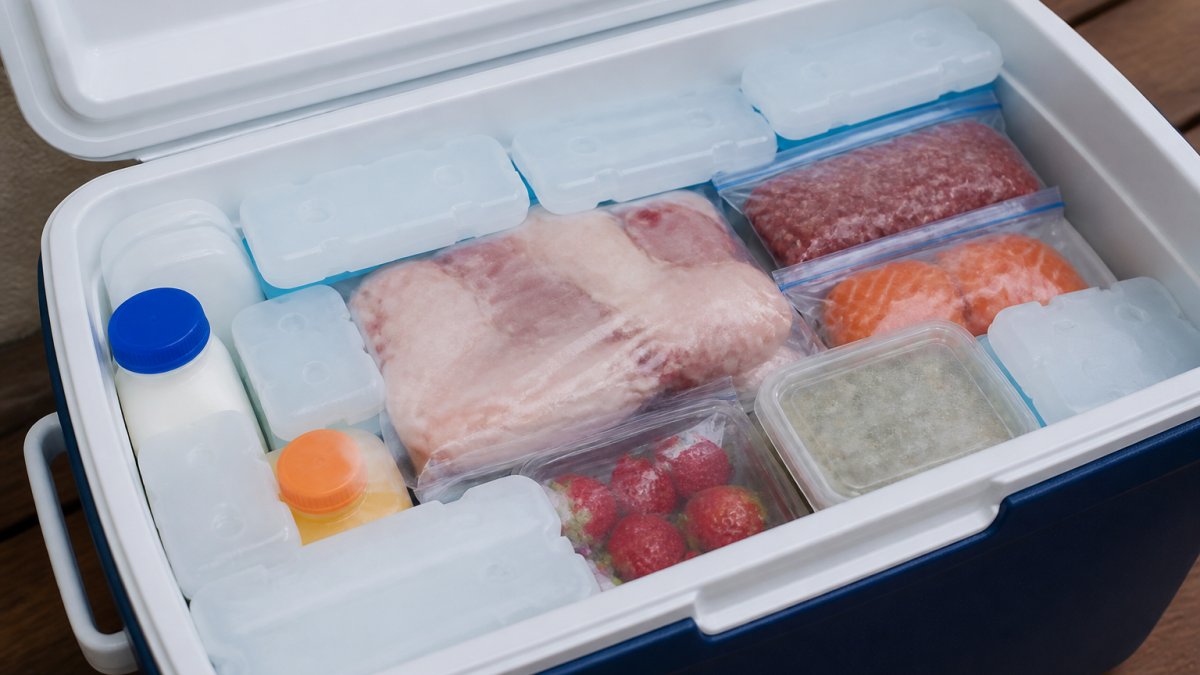
A cooler is your best tool during a power outage. Transfer perishables from the fridge as soon as power fails and pack it tightly with ice or frozen ice packs.
Layer strategically: ice packs on the bottom, then food, then more ice on top, so everything stays surrounded by cold. Frozen water bottles work almost as well as commercial ice packs.
Keep the cooler in your coolest room, away from sunlight and heat. A basement, shaded corner, or north-facing room stays cooler than a kitchen, every degree matters against spoilage.
Limit how often you open the cooler. Plan what you need, grab everything at once, then close it immediately.
Here’s what to prioritise in your cooler:
- Raw meat and poultry
- Fish and seafood
- Eggs
- Dairy products and cream
- Prepared foods and leftovers
- Foods that spoil quickly
Leave shelf-stable items on your shelves. Bread, canned goods, dried pasta, and unopened condiments don’t need cold storage during an outage.
What to Throw Away After a Power Outage
The safest rule is simple: when in doubt, throw it out.
Discard any perishable food that spent more than four hours above 4°C in your fridge. This includes meat, poultry, seafood, eggs, dairy, and leftovers. If you didn’t use an appliance thermometer and can’t confirm the temperature stayed safe, err on the side of caution.
Raw meat and poultry are highest risk, harbouring bacteria that multiply rapidly when warm. If there’s any question about how long they sat unrefrigerated, discard them.
Thawed frozen food presents a trickier decision. If the food thawed but still contains ice crystals and feels cold to the touch, it’s generally safe to refreeze. If it thawed completely and sat warm for hours, throw it away.
Dairy spoils quickly: discard milk, yoghurt, cream, and soft cheeses if the fridge rose above 4°C for more than a few hours. Hard cheeses and butter are more forgiving.
Condiments, peanut butter, and unopened jars of preserved foods are typically safe. These products have natural preservatives or high salt and sugar content that inhibits bacterial growth.
When in doubt, contact your local health department for guidance on specific foods and outage duration. Better to ask than risk food poisoning.
Preventing Food Spoilage During Extended Outages
Once an outage stretches past the first day, you are no longer waiting for the fridge to recover, you are rationing cold.
Get a realistic restoration estimate from your electricity distributor’s outage map or phone line, not neighbours.
Use a simple rule: if restoration is more than four hours away, move perishables to a cooler. If it is more than 24 hours away, start eating the most perishable items first and stop opening the freezer entirely.
When to move food to a cooler
Move food to a cooler as soon as the fridge has been without power for about two hours, or sooner if the outdoor temperature is high. Waiting until the four-hour mark leaves no margin. Prioritise in this order:
- Raw meat, poultry, and seafood
- Cooked leftovers and prepared meals
- Eggs
- Milk, yoghurt, cream, and soft cheese
- Hard cheese, butter, and condiments
Leave jams, peanut butter, bread, whole fruit, and unopened drinks out of the cooler unless you have spare ice.
How to pack a cooler so it actually holds temperature
A cooler only works if packed properly.
- Use block ice rather than cubed ice where possible. Blocks melt more slowly and release cold more evenly.
- Put a layer of ice or frozen bottles on the bottom, then food, then another layer on top.
- Keep raw meat and seafood in sealed containers at the bottom so any drips cannot contaminate ready-to-eat food.
- Group items by how often you need them. Put breakfast and snack items near the top, raw meat at the bottom.
- Place a fridge thermometer inside the cooler so you can check the temperature without unpacking it.
Aim to keep the cooler at 4°C or below.
Monitoring the cooler as the outage continues
Check the cooler temperature at least twice a day.
If you run out of ice, ask early, neighbours, shops with power, service stations, and local emergency services are worth contacting before your cooler warms.
Stretching your cold storage
Cook raw meat and poultry while still cold, then eat within a few hours or store the cooked portion in the coolest part of the cooler.
Shift meals toward shelf-stable foods, canned beans, tuna, dried pasta, rice, nuts, and crackers, preserving cooler space for foods that need it.
If the outage is forecast to be long
Before power fails, freeze water in clean containers and freezer bags for emergency ice blocks and, once melted, drinking water.
Never taste food to decide whether it is safe. Pathogens that cause foodborne illness do not change the taste, smell, or appearance of food. If you are unsure, throw it out.
Assessing and Recovering Your Appliances After Power Returns
When power returns, resist opening the fridge and freezer straight away. Give the compressors a few minutes to restart and pull down the temperature; opening immediately forces the appliance to work harder and extends recovery.
Safe restart sequence
- Wait five to ten minutes after power returns before opening either appliance.
- Check that the fridge and freezer are actually running. Listen for the compressor and feel for cool air at the vents.
- Read the appliance thermometers before moving anything. Note the fridge and freezer temperatures.
- Leave the doors closed for at least an hour to let the appliances stabilise.
- Then open and inspect.
If the fridge does not return to 4°C or below within about four hours, or the freezer does not reach 0°C or below, there may be a fault.
Verifying temperature and deciding what to keep
Use thermometer readings, not guesswork. If the fridge stayed at or below 4°C throughout, most perishables are safe.
For the freezer, check each item individually:
- Still frozen solid with visible ice crystals: safe to keep or refreeze.
- Partially thawed but still below 4°C: use within 24 hours or cook immediately.
- Fully thawed and warmer than 4°C for more than two hours: discard.
Do not refreeze anything that has thawed completely and sat warm. Refreezing does not destroy bacteria that have already multiplied.
Cleaning after an outage
If the fridge or freezer still smells off, run it empty for a few hours with a bowl of bicarbonate of soda inside to absorb odours before restocking.
If your appliance was flooded
Floodwater is not clean water. If your fridge or freezer was submerged or had floodwater inside, do not restart it yourself, floodwater carries sewage, chemicals, and pathogens and can damage electrical components.
- Do not plug the appliance in until it has been inspected by an electrician and a refrigeration technician.
- Discard all food that contacted floodwater, including sealed jars and cans that cannot be fully sanitised.
- Have the appliance professionally cleaned and sanitised before reuse, or replace it if the insulation has been saturated.
When to call a professional
Contact a refrigeration technician if:
- The appliance does not cool after power returns.
- You hear unusual noises, smell burning, or see water pooling around the appliance.
- The appliance was flooded or exposed to contaminated water.
- The appliance is more than ten years old and has struggled to hold temperature.
Keep a written record of outage duration, temperatures recorded, and foods discarded. This helps you plan better next time and provides evidence for an insurance claim for spoiled food, which some home and contents policies cover.
Photograph the thermometer readings and the food you discard before throwing it out. Insurers often ask for evidence when assessing a spoilage claim.
Frequently Asked Questions
How long will food stay safe in a fridge without power?
Refrigerated food remains safe for approximately 4 hours if you keep the door closed. The time depends on room temperature, how full your fridge is, and whether it’s a warm day. A full refrigerator maintains cold temperatures longer than an empty one. Use an appliance thermometer to monitor the temperature; if it rises above 4°C, perishable items become unsafe. Discard any food that has been above this temperature for more than 2 hours.
How long will frozen food stay safe during a power outage?
Frozen food stays safe for 48 hours in a full freezer if the door remains closed, or 24 hours in a half-full freezer. Ice crystals on frozen items indicate they can be refrozen safely after the power returns. Once thawed food reaches refrigerator temperature (above 4°C), bacteria multiply rapidly. Check the temperature with a food thermometer; if frozen items still have ice crystals and feel cold, they’re generally safe to refreeze.
What foods should I throw away after a power outage?
Discard meat, poultry, fish, seafood, eggs, milk, dairy products, and leftovers if they’ve been above 4°C for more than 2 hours. Thawed perishable food that shows signs of spoilage, odd odours, unusual colour, or slimy texture, must go. Produce and canned food are typically safe. When in doubt, throw it out; the cost of replacing food is far less than the risk of food poisoning from contaminated items.
Can you refreeze food that has thawed during an outage?
Yes, you can refreeze thawed food if it still contains ice crystals or has remained at refrigerator temperature (4°C or below) for no more than 2 hours. Thawed meat, poultry, and seafood can be refrozen if they were thawed safely in the refrigerator. However, if thawed food has been above 4°C for longer than 2 hours, or shows any signs of spoilage, it must be discarded. Using a food thermometer helps confirm safe temperatures before refreezing.