
Table of Contents
- 8 Signs Your Electrical Panel Needs Replacing
- 1. Frequent Tripping Circuit Breakers
- 2. Flickering or Dimming Lights
- 3. A Burning Smell From the Switchboard
- 4. Rust, Corrosion or Moisture Damage
- 5. Scorch Marks, Discoloration or a Warm Panel
- 6. Buzzing, Crackling or Humming Sounds
- 7. No Room for New Circuits or Breakers
- 8. An Outdated Fuse Box or Known Hazardous Panel
- What Is the Electrical Panel Lifespan?
- Repair, Replacement or Upgrade: What’s the Difference?
- When to Book an Electrical Safety Inspection
- What Happens During a Panel Replacement and How Long It Takes
- Conclusion
- Frequently Asked Questions
Last Updated: October 5, 2026
8 Signs Your Electrical Panel Needs Replacing
A burning smell near the switchboard is the one sign you never wait on. Switch off the main breaker and call a licensed electrician the same day. Most other warning signs give you time to plan, but heat, smoke or scorch marks mean stop now.
At Air Conditioning & Electrical, our fully licensed electricians handle switchboard inspections, panel replacements and full upgrades across the region, and the pattern is always the same: homeowners wait until something fails. Knowing the signs your electrical panel needs replacing early is what keeps a house safe and avoids a panicked call in the middle of summer.
Here are the eight warning signs we check first, in the order that matters most.
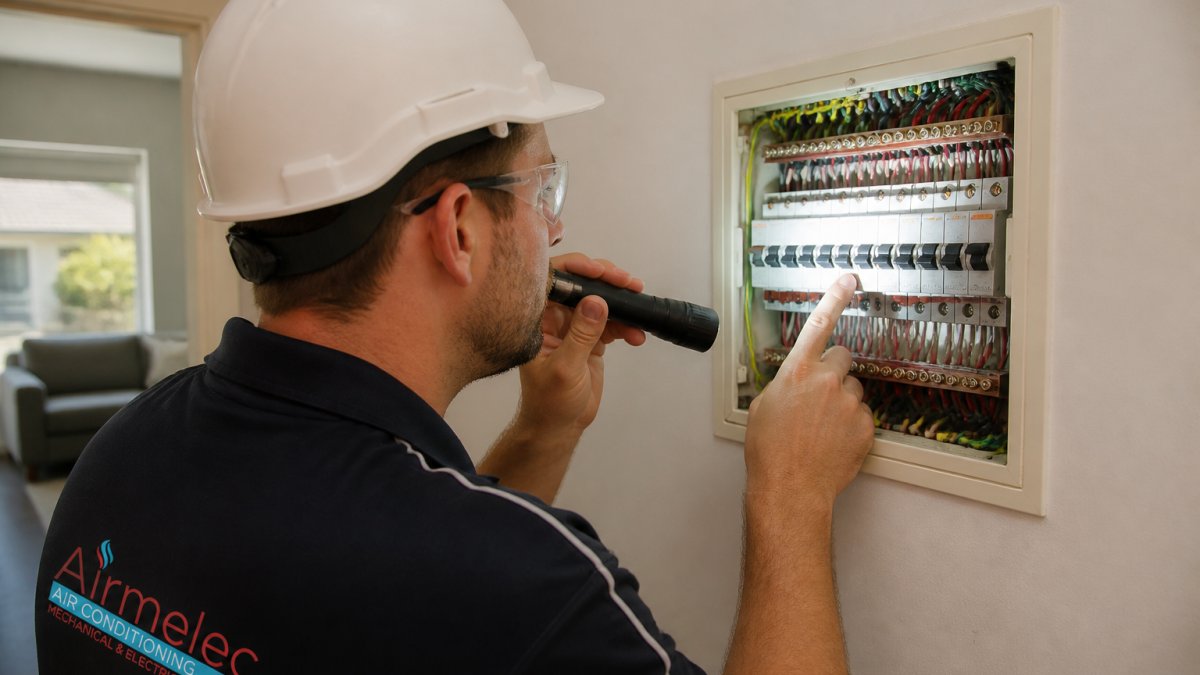
1. Frequent Tripping Circuit Breakers
A breaker that trips now and then is doing its job. A breaker that trips weekly is telling you the circuit is overloaded or failing.
Watch for these patterns:
- The same breaker trips again and again
- It happens when you run the kettle, heater and dryer together
- The breaker feels hot to touch after it trips
If you have to reset it more than once a month, book an inspection. Frequent tripping circuit breakers often point to an overloaded circuit, not a faulty breaker.
2. Flickering or Dimming Lights
Lights that dim when the fridge kicks in suggest a voltage drop. That usually means the panel cannot keep up with the load.
Loose connections cause flickering too. Both problems get worse over time and both can lead to overheating.
3. A Burning Smell From the Switchboard
This is the emergency sign. A burning smell from the switchboard means insulation or a connection is overheating right now.
Do this immediately:
- Turn off the main switch
- Do not touch the panel with bare hands
- Call a licensed electrician straight away
Never ignore this one and never “wait and see”.
If you see smoke, hear crackling, or smell burning near the panel, treat it as a fire risk. Cut the main power and call an electrician. Delaying this is how house fires start.
4. Rust, Corrosion or Moisture Damage
Water and electricity do not mix. Rust or corrosion inside the panel means moisture has got in, often through an old enclosure or a roof leak.
Check for:
- Rust streaks on the panel door or breakers
- Green or white corrosion on terminals
- Dampness or a musty smell near the board
Corroded parts fail without warning. In most cases the panel needs replacing, not patching.
5. Scorch Marks, Discoloration or a Warm Panel
A warm panel or hot breakers mean heat is building where it should not. Scorch marks and discoloration are proof that something has already overheated.
Look for:
- Black or brown marks around breakers
- Melted or warped plastic
- A panel that feels warm to touch
Any of these means the panel is a hazard. Get it checked the same day.
6. Buzzing, Crackling or Humming Sounds
A faint hum from a modern panel is normal. Buzzing or crackling is not.
Crackling usually means a loose connection arcing inside the panel. Arcing creates heat and can start a fire. Buzzing often points to a damaged breaker or a failing switch.
If you hear either, switch off the main power and call an electrician.
7. No Room for New Circuits or Breakers
Adding a circuit needs a spare breaker space. If your panel is full, you have no room for new appliances, a granny flat, or an EV charger.
Signs your panel is maxed out:
- No empty slots for new breakers
- Double-tapped breakers crammed into one slot
- Extension cords and power strips running everywhere
Reliance on extension cords and power strips is a red flag. It means the home needs more circuits than the panel can supply.
8. An Outdated Fuse Box or Known Hazardous Panel
An old fuse box with ceramic fuses has no safety switch and no modern protection. Many insurers and electricians treat these as a risk.
Watch for:
- A fuse box instead of a breaker panel
- A panel with no safety switches fitted
- A brand or model you cannot identify
- Open knockouts where insects and moisture get in
If the panel is a known hazardous type, replacement is the safe call, not repair.
The three signs that mean act today: a burning smell, scorch marks or discoloration, and crackling sounds. Everything else gives you time to plan a proper inspection.
What Is the Electrical Panel Lifespan?
Most electrical panels last around 25 to 30 years. After that, parts wear out, breakers get slow to trip, and spare parts become hard to find. But age alone is not a diagnosis, plenty of 30-year-old panels are still sound, and some 15-year-old panels are already hazardous.
What actually shortens a panel’s life
- Corrosion from coastal air, humidity, or a roof leak. Rust on the enclosure or green/white corrosion on terminals is a strong signal.
- Sustained overload. A panel that has run near its limit for years runs hotter, and heat ages breakers and insulation faster.
- Known design faults. Some older panel types and breaker brands have documented failure modes. Age is a prompt to check the model, not a verdict on its own.
- Poor workmanship. Double-tapped breakers, undersized wiring, and unlabelled circuits all add stress and make future faults harder to trace.
- Insect or rodent activity. Nests and chewed insulation inside the enclosure cause moisture and short circuits.
How an electrician actually diagnoses end-of-life
A proper inspection is not just a visual glance. A licensed electrician will typically:
- Check the main switch and incoming supply for heat damage, discolouration, and tightness of terminals.
- Test each breaker for correct trip times and signs of sluggish operation.
- Thermal-scan or hand-check for hot spots under load, a breaker that runs warm with normal load is a warning.
- Inspect wiring insulation at the terminals for cracking, brittleness, or heat marks.
- Confirm safety switch operation and check that the panel is correctly labelled.
- Verify the panel’s rated capacity against the home’s actual load and any planned additions.
What you can safely check yourself
You do not need to open the panel to gather useful information. From the outside, you can:
- Read the label inside the panel door for the age, brand, and model.
- Note whether the panel uses fuses or breakers.
- Count how many spare breaker slots are free.
- Look for rust, scorch marks, or a warm cover.
- Listen for buzzing or crackling when the house is quiet.
Never remove the panel cover or work inside the switchboard yourself. The main supply terminals remain live even when the main switch is off. Opening a panel is a job for a licensed electrician.
Age plus any warning sign is the trigger
If your panel is past 25 years old and showing any sign above, replacement is usually the better long-term choice. If it is past 25 years old but tests clean, an inspection every few years is a reasonable middle path. The decision should rest on the condition of the panel, not the calendar alone.
Repair, Replacement or Upgrade: What’s the Difference?
These three words get used as if they mean the same thing. They do not, and the difference changes what you pay and what you get.
| Job | What It Involves | Best For |
|---|---|---|
| Breaker repair | Replacing a single faulty breaker or switch | One isolated fault, panel otherwise sound |
| Panel replacement | Swapping the old panel for a new one of the same capacity | An aged or damaged panel, same power needs |
| Panel upgrade | Fitting a larger panel with more capacity and safety switches | New appliances, extensions, granny flats, EV charging |
A repair fixes one problem. A replacement fixes the panel. An upgrade fixes the panel and gives you room to grow.
If you are planning a granny flat, a new air conditioner, or an EV charger, ask for an upgrade quote, not a straight replacement. Doing both at once is cheaper than coming back later.
When to Book an Electrical Safety Inspection
Book an electrical safety inspection if the panel is over 20 years old, if you have just bought the home, or if any warning sign above has appeared.
We recommend an inspection when:
- You are buying or selling a property
- You are adding a major appliance or extension
- You have had frequent breaker trips
- You cannot find or read a safety switch
An inspection is a check, not a sales pitch. A good electrician will tell you if the panel is fine and only flag what actually needs work.
What Happens During a Panel Replacement and How Long It Takes
A panel replacement usually takes half a day to a full day, depending on the size of the home and the state of the wiring.
The process runs like this:
- Isolate the power and confirm it is safe to work
- Remove the old panel and label every circuit
- Fit the new panel, breakers and safety switches
- Test each circuit and confirm everything works
- Label the panel clearly and walk you through it
Most jobs need a permit and a licensed electrician. Your electrician should handle the paperwork and, where needed, coordinate with the network provider for the supply.
A few things can stretch the timeline:
- Old wiring that needs tidying
- A switchboard in a hard-to-reach spot
- Extra circuits being added at the same time
Expect the power to be off for most of the day. Plan around the fridge, the home office and any medical equipment.
Conclusion
An ageing panel is one of the most common causes of house fires, and it is one of the easiest problems to fix once you know what to look for. If any of the eight signs above sound familiar, do not wait for a failure to force the decision.
At Air Conditioning & Electrical, our fully licensed electricians handle switchboard inspections, panel replacements and full upgrades across the region. We are an approved installer under the NSW Government’s Home Energy Saver loan program, and we offer 0% interest finance options through Brighte to make safety upgrades easier to afford.
Get a quote today and let our team check your panel before it becomes an emergency.
Frequently Asked Questions
How do I know if my electrical panel needs to be replaced?
Look for a cluster of warning signs rather than one: breakers that trip often, lights that flicker or dim when appliances start, a warm panel or hot breakers, scorch marks, rust, buzzing or crackling sounds, and no spare breaker space. An electrical panel that is 25 to 30 years old with any of these symptoms is a strong candidate for replacement. A licensed electrician can confirm with an electrical safety inspection before you commit.
What is the average lifespan of a home electrical panel?
Most residential panels are expected to last around 25 to 30 years, and some older units reach 40 years with light use. Age alone is not the deciding factor: coastal humidity, moisture damage, past overloads and heat all shorten service life. If your panel is past 25 years and you are adding new appliances or circuits, have it assessed rather than assumed to be fine.
Is a burning smell near a switchboard an electrical emergency?
Yes. A burning smell from a switchboard, especially with scorch marks, discoloration or a warm panel, points to overheating components and is a fire risk. Do not reset breakers repeatedly or keep using the circuits. Turn off the main switch if it is safe to reach, keep everyone clear, and call a licensed electrician immediately for an urgent inspection and repair.
Can an electrician repair a switchboard, or does it need replacing?
It depends on the fault. A single damaged breaker or a loose connection can often be repaired. Replacement becomes the better option when the panel is undersized, has no spare breaker space, uses an outdated fuse box, or shows heat damage, rust or corrosion across the board. An electrician will test the panel and explain whether a repair, a replacement or an upgrade is the sensible path.