
Last Updated: October 27, 2026
Quick Summary
Ducted air conditioning is worth it when you need to cool or heat most of a large home at once, and it rarely stacks up when you only use one or two rooms. Upfront installation typically lands between $14,000 and $25,000, so it only makes sense if the system earns its keep across the whole floor plan.
- Split systems suit small homes and single rooms with lower entry cost and room-by-room control.
- Leaky ductwork can cut a central system’s effective efficiency by as much as 30%.
- Zoning is the single biggest lever on ducted running costs and may allow a smaller system.
- Flexible duct typically needs a clear ceiling cavity of around 250-300 mm.
- Get the roof cavity inspected before committing, and treat a quote without a site visit as indicative only.
Table of Contents
- The Verdict: When Ducted Air Conditioning Pays Off
- Ducted vs Split System Air Conditioning: A Fair Comparison
- Ducted Air Conditioning Running Costs: What Drives Your Bill
- Ducted Air Conditioning Zoning: Control Where You Cool
- Ducted Air Conditioning for Existing Homes: Retrofitting Realities
- Health, Air Quality and Resale Value: The Angles That Matter
- Book a Site Assessment Before You Commit
- Frequently Asked Questions
The Verdict: When Ducted Air Conditioning Pays Off
Ducted air conditioning is worth it when you need to cool or heat most of a large home at once, and it rarely stacks up when you only use one or two rooms. That is the honest answer, and it explains why two households on the same street can reach opposite conclusions about the same system.
Upfront installation costs for a residential ducted system typically land between $14,000 and $25,000, according to Tony Stephens Refrigeration pricing estimates. That is a serious outlay, and it only makes sense if the system earns its keep across the whole floor plan. Our energy-efficient air conditioning upgrades guide shows which upgrades help it pay off.
Below, we break down the comparison, the running costs and the retrofit realities so you can judge your own house fairly.
Ducted vs Split System Air Conditioning: A Fair Comparison
Ducted air conditioning is a central system that cools or heats air in one indoor unit and distributes it through ductwork hidden in the ceiling cavity to vents in each room. A split system, by contrast, mounts one indoor head on a wall in a single room and cools only that space.
The upfront gap is wide. What’s The Damage cost comparison lists ducted systems around $8,000 to $22,000 and split systems around $1,200 to $5,500 per unit. Note that this is indicative only; a real quote depends on your layout, ceiling access and how many zones you want.
Where Split Systems Win
- Lower entry cost. One head in one room costs a fraction of a whole-home install.
- Room-by-room control. You cool only what you use, which can keep energy consumption down.
- Simpler retrofits. No ductwork, so older homes with tight roof spaces are less of a headache.
- Quieter bedrooms. Modern inverter splits run very quietly on low fan speeds.
Where Ducted Systems Win
- Whole-home comfort. Every room reaches a consistent temperature, which matters for families and open-plan living.
- Discreet vents. No wall-mounted boxes; the hardware sits out of sight in the ceiling.
- Zoning potential. You can shut off unused rooms, and zoning can even allow a smaller system to be specified.
- One system, one control point. A single smart thermostat manages the lot.
| Factor | Ducted | Split |
|---|---|---|
| Upfront cost | Higher | Lower |
| Rooms covered | Whole home | One per unit |
| Appearance | Discreet ceiling vents | Wall-mounted heads |
| Zoning | Built-in option | Not applicable |
| Retrofit difficulty | Moderate to high | Low |
| Best for | Large, open-plan homes | Small homes, single rooms |
Ducted Air Conditioning Running Costs: What Drives Your Bill
Running costs are where the ducted argument gets interesting, because the system’s efficiency depends heavily on installation quality. Leaky ductwork can cut a central system’s effective efficiency by as much as 30%, according to AC Direct’s central versus split analysis. That is wasted money every time the system runs.
Several factors push your bill up or down:
- Duct sealing and insulation. Poorly sealed ducts leak cooled air into the roof cavity.
- Zoning discipline. Cooling empty rooms is pure waste.
- System capacity. An oversized unit cycles on and off and never hits peak efficiency.
- Inverter technology. Modern inverter compressors modulate output instead of running flat out.
- Maintenance. Clogged filters and dirty coils force the system to work harder.
For practical ways to trim your bill, see our guide on how to lower air conditioning bills.
Ducted Air Conditioning Zoning: Control Where You Cool
Ducted air conditioning zoning is the practice of dividing your home into separately controlled areas, each with its own vents and damper, so you can cool the living areas by day and the bedrooms at night without running the whole system.
Zoning is the single biggest lever on ducted running costs. It lets you match output to actual use, and SolarQuotes’ ducted air conditioning guide notes that zoning can reduce wasted energy and may allow a smaller, more efficient system to be installed. That can offset part of the upfront cost over the system’s life.
Be realistic about the trade-off, though. Zoned systems cost more to install, and sensors placed poorly can leave rooms overcooled while others stay warm. If you are weighing it up, our breakdown of ducted air conditioning zoning and whether it is worth it goes deeper.
Ducted Air Conditioning for Existing Homes: Retrofitting Realities
Ducted air conditioning for existing homes is entirely possible, but the roof cavity decides how easy it will be. A single-storey home with a generous, accessible ceiling space is straightforward. A two-storey home with a flat roof or a tight cavity is a different job.
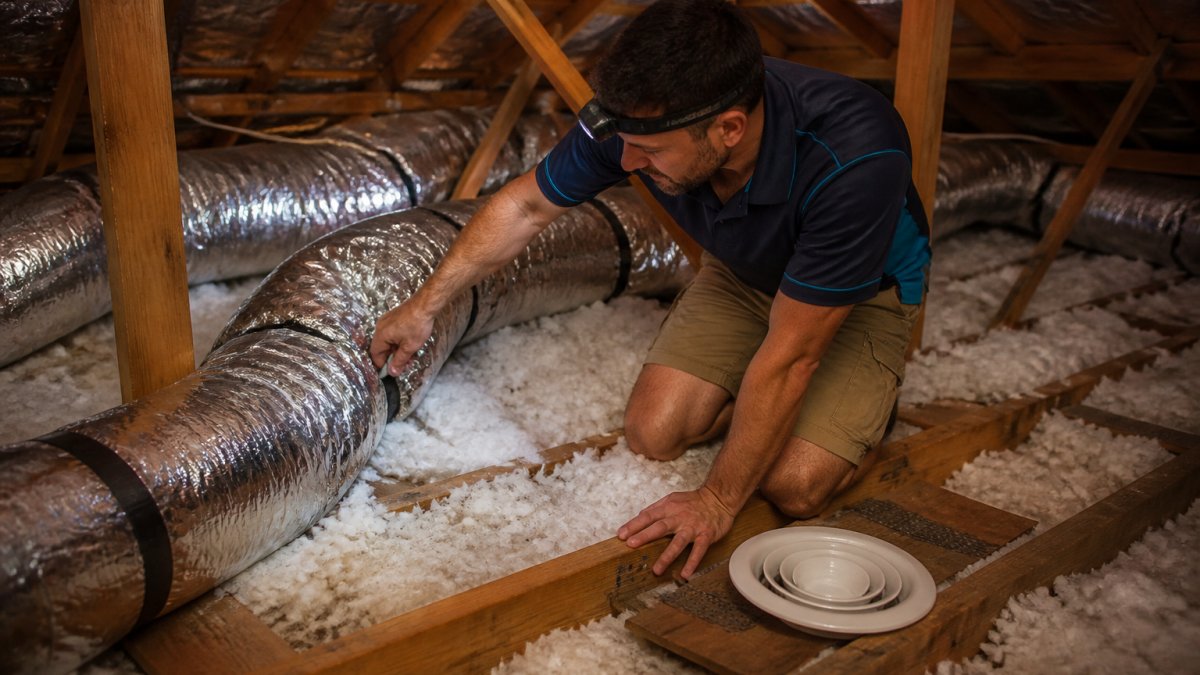
The practical constraints fall into four buckets:
- Ceiling space and access. Flexible duct typically needs a clear cavity of around 250-300 mm, and the indoor fan coil unit needs a serviceable platform with room for the condensate drain to fall to a tundish or external outlet. Trussed roofs with cross-bracing, flat roofs with minimal fall, and cathedral ceilings often force a bulkhead or a different unit location.
- Duct sizing and layout. Ducts are sized by airflow, not by guesswork. Undersized trunk-and-branch runs strangle airflow to far rooms, while oversized runs waste cavity space. A proper design calculates static pressure and room-by-room load rather than copying a template.
- Power and controls. A ducted system draws more current than a single split, so the switchboard, circuit protection and cable run need checking. Zoned systems add damper motors and a control loom that must be planned before the ceiling goes back.
- Condensate and drainage. The indoor unit produces condensate whenever it cools. The drain must slope continuously to a lawful discharge point; a sagging or trapped drain is one of the most common retrofit callbacks.
Compliance matters here.
Get the cavity inspected before you commit to anything, and treat a quote given without a site visit as indicative only.
If you are building or renovating, raise ducted air conditioning at design stage rather than after handover.
Health, Air Quality and Resale Value: The Angles That Matter
Ask your installer what filter class the return-air box accepts and how accessible the filter is. A filter you cannot easily reach will not be changed, and an unreachable filter is a design fault, not a maintenance problem.
For the health side of the equation, our piece on indoor air quality and comfort covers what actually moves the needle.
Book a Site Assessment Before You Commit
No article can tell you whether ducted air conditioning is worth it for your specific house, because the answer depends on your floor plan, ceiling cavity, insulation and how many rooms you actually use.
We are an approved installer under the NSW Government’s Home Energy Saver loan program, and we offer 0% interest finance options via Brighte to spread the cost of an energy-efficient upgrade. If you want to understand why local matters, read our seven reasons to choose a local HVAC contractor.
Frequently Asked Questions
Is ducted air conditioning cheaper to run than split systems?
It depends on how you use it. A ducted system running across the whole house uses more energy than cooling one or two rooms with splits. However, zoning lets you close off unused areas, and a well-sealed duct network keeps efficiency high. Leaky ducts can cut effective efficiency by up to 30%, so installation quality matters as much as the system type. A site assessment can show where your home loses cool air and how zoning would change your running costs.
Can ducted air conditioning cool one room at a time?
Yes, if the system is zoned. Zoning divides the duct network into separate areas, each controlled by its own thermostat or damper. You can cool just the living room during the day and the bedrooms at night. Without zoning, a standard ducted system conditions the whole house whenever it runs. Zoning adds to the upfront cost, but it reduces wasted energy and lets you install a smaller system in some homes.
Is ducted air conditioning worth it in an existing home?
It can be, but retrofitting brings challenges. Ductwork needs space in the ceiling cavity or under the floor, and older homes may need electrical upgrades to support the system. A site inspection confirms whether your roof space, switchboard and layout can take a ducted system without major structural work. If access is tight, a split system or a multi-head setup may deliver better value for the same comfort.
What are the disadvantages of ducted air conditioning?
The main drawbacks are upfront cost, the space needed for ductwork, and higher running costs if the system conditions rooms you are not using. Ducted systems also rely on good installation: poorly sealed ducts waste energy and reduce airflow to distant rooms. Maintenance is more involved than a single split, with filters and ductwork to check. Weigh these against whole-home comfort, discreet vents and central control before deciding.
How long does a ducted air conditioning system last?
With regular servicing, a quality ducted system typically lasts 15 to 20 years. Longevity depends on installation quality, how often filters are cleaned, and whether the ductwork is sealed and insulated properly. Systems in coastal or dusty areas may need more frequent checks. A maintenance schedule that includes coil cleaning and duct inspections helps you get the full life from the unit and keeps energy consumption steady.
The real question is not whether ducted air conditioning is good, but whether it fits your home and how you live in it. Get that assessment right and the system pays you back in comfort, efficiency and lower running costs for years. Get it wrong and you inherit an expensive system that never quite works. Get started with Air Conditioning & Electrical and book a site assessment so you can decide with real numbers in front of you, backed by fully licensed technicians and flexible finance options.
