
Last Updated: November 4, 2026
Quick Summary
AC installation takes a few hours on site for most straightforward split systems, while full ducted systems usually take several working days. A like-for-like split replacement typically takes 3-4 hours, and a new single split installation takes 4-6 hours, both completed the same day.
- Multi-head split systems with 2-3 heads typically take one full day to install.
- Ducted systems in single-storey homes usually take 2-3 working days, with retrofit or two-storey jobs taking 3-5 days.
- Most split systems need a dedicated circuit, so have your switchboard checked before the installation date is locked in.
- Clear roof access and decide indoor and outdoor unit positions before the day to avoid delays mid-install.
- In Australia, electrical work must be done by a licensed electrician, so never handle the electrical side yourself.
Table of Contents
- How Long Does AC Installation Take? The Short Answer
- Split System Air Conditioner Installation Time
- Ducted Air Conditioning Installation Time
- Cassette and Multi-Head Systems: What to Expect
- The Air Conditioning Installation Process, Step by Step
- Electrical Work for Air Conditioner Installation
- What Slows an Installation Down, and How to Avoid It
- Book Your Installation with a Licensed Local Team
- Frequently Asked Questions
How Long Does AC Installation Take? The Short Answer
Most straightforward split system installations take a few hours on site, while full ducted systems usually take several working days. The range is wide because “AC installation” covers everything from swapping a like-for-like outdoor unit to fitting a whole-house system into a home that has never had one.
Two homes on the same street can take very different amounts of time. The difference usually comes down to access, switchboard capacity and whether the pipework run is short or long.
Below, we break down realistic time frames by system type, walk through what actually happens on the day, and show you what slows a job down so you can avoid it.
| System type | Typical time on site | Typical working days |
|---|---|---|
| Single split system, like-for-like replacement | 3-4 hours | Same day |
| Single split system, new installation | 4-6 hours | Same day |
| Multi-head split system, 2-3 heads | 1 day | 1 day |
| Cassette system, single room | 4-6 hours | Same day |
| Ducted system, single-storey home | 2-3 days | 2-3 days |
| Ducted system, two-storey or retrofit | 3-5 days | 3-5 days |
Split System Air Conditioner Installation Time
Split system air conditioner installation time depends on the job. A straight replacement, where the bracket, pipework and electrical are already in place, is usually quicker than a brand-new install with a long pipe run and a new circuit.
Here is what actually eats the hours:
- Indoor unit mounting. Finding a spot with clearance and a straight path through the wall.
- Pipework and drainage. Running refrigerant lines and making sure condensate drains away from the house.
- Outdoor unit placement. Access, clearance and noise considerations for neighbours.
- Electrical connection. A dedicated circuit from the switchboard, which we cover further down.
- Commissioning. Pressure testing, evacuating the lines and checking the system runs correctly.
Getting the unit size right matters here too, because an undersized or oversized unit means rework. Our guide on how to size an air conditioner for any room walks through the room-by-room method we use.
Ducted Air Conditioning Installation Time
Ducted air conditioning installation is measured in working days rather than hours. Access to the roof space, the storey of the home and the need for new ceiling vents all affect how long the work takes.
The bulk of that time is not the outdoor unit. It is the ductwork.
- Duct runs. Getting flexible duct through roof space, around beams and to each room.
- Zoning. Fitting dampers and controllers so you can run different zones separately.
- Vents and returns. Cutting and fitting ceiling outlets and the return air grille.
- Insulation and sealing. Making sure ducts are insulated and joints are sealed so you are not cooling the roof space.
A common mistake is booking ducted installation for a week when the roof space has not been checked first. Access is the single biggest variable, and it is worth confirming before the date is locked in.
Cassette and Multi-Head Systems: What to Expect
Cassette systems suit open-plan living and small commercial spaces. The ceiling work adds time to the installation. You need clearance above the ceiling, a drain route and a sturdy mounting frame.
Multi-head split systems run two or more indoor units off one outdoor unit. Each additional head adds pipework, a wall penetration and a commissioning check, so the time stacks up.
Where a multi-head system wins is in homes with several rooms used at different times. Where it loses is on long pipe runs, because every extra metre of refrigerant line adds work and can affect performance if the system is not designed for it.
The Air Conditioning Installation Process, Step by Step
The air conditioning installation process follows a broadly similar sequence on most jobs. Knowing the order helps you plan your day and understand why the technician is doing what they are doing.
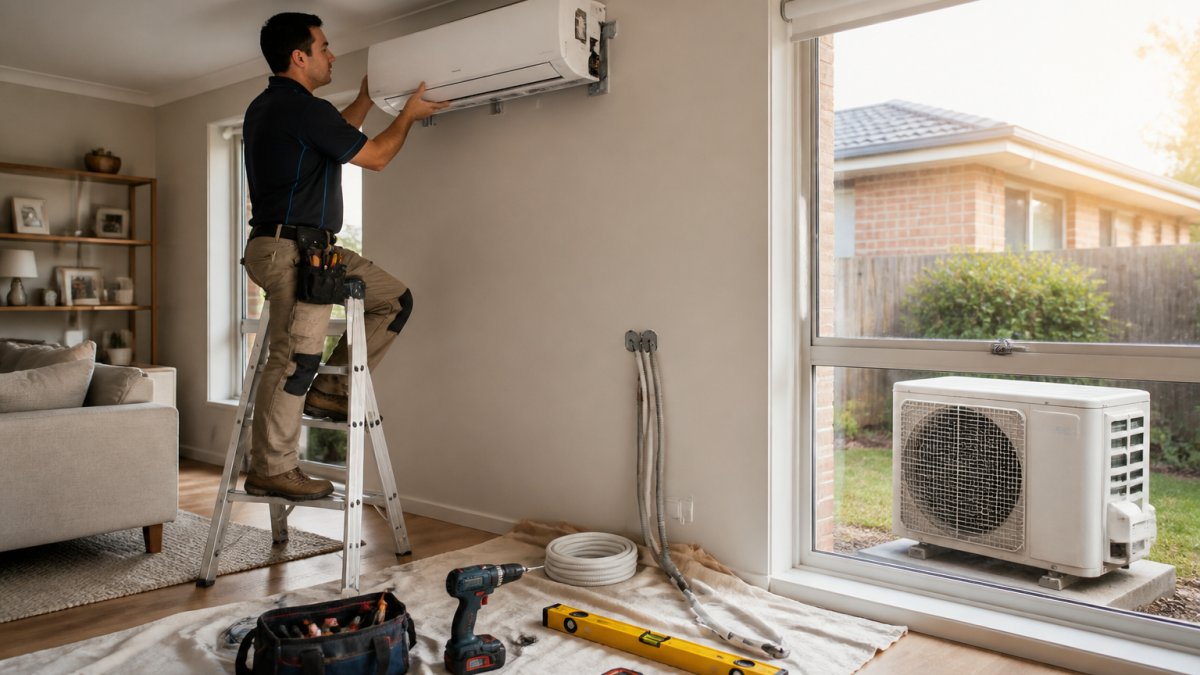
Watch out: if an installer quotes a single figure without breaking it down by stage, ask what is included, because a low headline time often excludes the electrical circuit or the pipework run.
Ducted jobs involve additional work such as duct runs through roof space, zoning dampers, ceiling vents and return air grilles, which is why they are measured in working days rather than hours.
Electrical Work for Air Conditioner Installation
Electrical work for air conditioner installation can slow a job down. Most split systems need a dedicated circuit, and a licensed electrician should check your switchboard before anything is connected.
Electrical work can add time to the job. If a switchboard has no spare capacity, an upgrade may be needed before the air conditioner can be connected, and it is better to know this at the quoting stage than on the day of installation.
Two things are worth understanding before your installer arrives. First, load requirements: our guide on how to calculate HVAC electrical load requirements explains how the circuit size is worked out. Second, compliance: common electrical compliance issues in HVAC installations covers the problems that most often hold up sign-off.
What Slows an Installation Down, and How to Avoid It
Delays almost always come from the same handful of causes. The useful distinction is between predictable work you can plan for and surprises that only show up once the team is on site. Most of the predictable ones are avoidable with a bit of preparation; the surprises are why a good quote includes a contingency.
Predictable work you can plan around:
- Long pipe runs. Every extra metre of refrigerant line adds work and can affect performance if the system is not designed for it. Decide the outdoor unit position at quote stage so the run is priced and scheduled.
- Switchboard at capacity. Have it checked before the date is locked in, not on the day. A switchboard upgrade is a separate job with its own lead time.
- No roof or underfloor access. Clear the manhole and move stored items before the team arrives. A roof space packed with boxes turns a 20-minute duct run into an hour.
- Parking and access. A clear path to the outdoor unit saves carrying time, especially for heavier multi-head and ducted outdoor units.
- Pets and children. Arrange for someone to manage them during drilling and testing, both for safety and to keep the job moving.
- Unclear unit placement. Decide indoor and outdoor positions before the day, not during it. Changing your mind mid-install means re-drilling and re-running pipework.
Surprises that can still add time:
- Structural work. A wall that turns out to be load-bearing, or a ceiling cavity too shallow for a cassette, may need a revised mounting approach.
- Electrical upgrades beyond the circuit. Older wiring or a switchboard with no spare capacity can turn a one-hour connection into a separate upgrade visit.
- Weather. Outdoor unit work and roof access are affected by heavy rain, high wind or extreme heat, and installers will pause rather than risk safety. In most cases the job resumes the same or next day.
- Scheduling and permit issues. Some jobs need building or planning approval, particularly where an outdoor unit is visible from the street or mounted on a boundary. Confirm at quote stage whether approval is required, because waiting on it can push the install date back.
One thing we see often is homeowners trying to speed things up by handling the electrical side themselves. In Australia, electrical work must be done by a licensed electrician. Our explainer on why you should never DIY electrical work sets out the safety and legal reasons plainly.
Watch out: if a quote does not mention contingency for structural or electrical surprises, ask how those are handled, because the cheapest headline figure is often the one most likely to grow on the day.
Book Your Installation with a Licensed Local Team
A realistic timeline is the difference between a smooth install and a disrupted week. Get the site checked properly, confirm the system type and access, and the estimate you receive will hold up on the day.
Air Conditioning & Electrical is locally owned and operated, with fully licensed refrigeration mechanics and electricians who handle the air conditioning and the electrical work as one job. We are an approved installer under the NSW Government’s Home Energy Saver loan program, and we offer 0% interest finance options through Brighte for eligible energy-efficient upgrades. That means one team, one schedule and no waiting on a separate electrician.
If you want a clear time frame before you commit, get a quote today and we will assess your site and give you a realistic answer.
Frequently Asked Questions
Can an air conditioner be installed in one day?
Yes, in most cases. A straightforward single-head split system is usually a same-day job, with the installer on site for around three to five hours. Ducted systems and multi-head setups typically run across one to three days because of ductwork, ceiling access and extra refrigerant lines. Site conditions decide the rest: a simple replacement using existing pipework and wiring is quicker than a new installation that needs a new circuit run from the switchboard.
Does replacing an air conditioner take less time than a new installation?
Usually, yes. A replacement can often reuse the existing mounting brackets, pipework and electrical circuit, so the installer skips the slowest parts of the job. Expect a shorter day on site, though the installer still needs to pressure-test the lines, check drainage and commission the new unit. If the old system used a refrigerant that is no longer available, the pipework may need replacing, which pushes the job back towards new-installation timing.
Do electrical upgrades add time to an air conditioning installation?
They can. Electrical work for air conditioner installation includes a dedicated circuit, an isolating switch near the outdoor unit and a safety switch at the board. If your switchboard has spare capacity, this adds little time. An older board that needs upgrading, or a circuit that has to be run across the house, can add hours and may need a separate electrical appointment. A licensed electrician should assess the board before the installation day so the scope is clear.
How should I prepare my home for air conditioner installation?
Clear access to the indoor wall, the outdoor unit position and the path between them. Move furniture away from the mounting wall, unlock side gates, and keep pets and children out of the work area. If the installer needs ceiling access for ducted work, clear the wardrobe or hallway under the manhole. Confirm parking for the van and let the installer know about any asbestos, fragile ceilings or hidden pipes you are aware of before the day begins.
The next step is simple: tell us the system you have in mind and share a couple of photos of the indoor and outdoor locations. We will confirm access, flag anything that could add time, and lock in a date. Get started with Air Conditioning & Electrical and book an installation with a timeline you can actually plan around.
