
Table of Contents
- What a Failing Electrical Panel Looks Like
- Burning Smells and Signs of Overheating
- Unusual Sounds: Buzzing, Humming, and Crackling
- Bad Circuit Breaker Symptoms and Frequent Trips
- Why Your Circuit Breaker Keeps Tripping
- Electrical Panel Inspection: What to Check and When
- When to Replace an Electrical Panel
- What to Do If You Suspect Panel Failure
- Frequently Asked Questions
Last Updated: October 20, 2026
What a Failing Electrical Panel Looks Like
An electrical panel is the heart of your home’s electrical system. It distributes power to every circuit in your house.
A failing electrical panel shows itself through physical damage, unusual sounds, and erratic electrical behaviour. The problem isn’t always obvious at first glance.
At Air Conditioning & Electrical, we help homeowners identify electrical hazards before they escalate into safety risks. A failing panel can lead to fires, electrocution, or complete power loss.
The key is recognising the signs your electrical panel is failing and the difference between a minor fault and a serious panel failure.
If you smell burning, see scorch marks, or hear crackling from your panel, stop using that circuit immediately and contact a licensed electrician. Do not attempt repairs yourself.
Burning Smells and Signs of Overheating
A burning smell near your electrical panel is a red flag. It signals overheating inside the panel or a failing component.
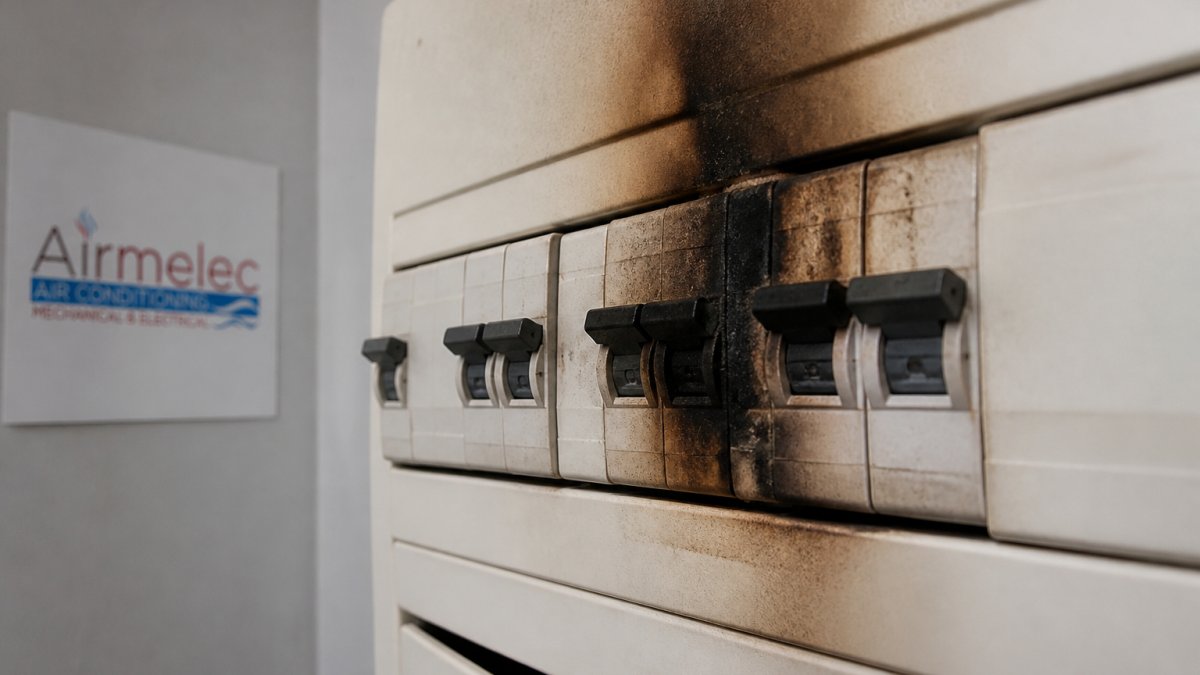
Overheating happens when electrical resistance builds up. Loose connections, faulty breakers, or overloaded circuits generate heat. This heat can melt insulation, damage wiring, and create a fire risk.
Look for these physical signs of overheating:
- Scorch marks on the panel cover or around individual breakers
- Discoloration or blackening of plastic components
- Melted or warped breaker handles
- Visible char on wiring or terminals
- A hot panel cover when you touch it (after turning off power)
The smell itself is distinctive. It’s often described as an electrical or acrid odour, similar to burning plastic or rubber. Don’t ignore it.
Overheating can occur in stages. Early signs include a faint smell that comes and goes. As the problem worsens, the smell becomes constant.
If your panel smells hot but you don’t see visible damage, the problem may be internal. Loose connections inside the panel can generate heat without leaving obvious marks. This is why professional inspection is essential.
Unusual Sounds: Buzzing, Humming, and Crackling
Your electrical panel should operate silently. Any unusual sound from it demands attention.
Buzzing, humming, crackling, hissing, or popping noises indicate electrical faults. These sounds come from arcing, loose connections, or failing components inside the panel.
Buzzing or humming often signals loose wiring or a faulty breaker.
Crackling or popping suggests arcing, electrical current jumping across a gap it shouldn’t. Arcing generates extreme heat and can ignite nearby materials (Electrical safety).
Hissing typically means moisture has entered the panel or a component is failing. Water and electricity are a hazardous combination.
These sounds may come and go. You might hear them only when certain circuits are in use. That pattern actually helps pinpoint the problem.
Don’t assume it’s normal.
Bad Circuit Breaker Symptoms and Frequent Trips
A circuit breaker protects your home from electrical fires. It cuts power to a circuit when current exceeds safe levels.
A bad circuit breaker fails to trip when it should, trips when it shouldn’t, or won’t reset after tripping.
Breakers that won’t reset are the most obvious sign of failure.
Breakers that trip constantly but reset normally suggest an overloaded circuit or a fault downstream. The breaker is doing its job, protecting you.
A breaker that never trips despite frequent power surges is dangerous. It means the circuit has no protection. Overheating, fire, and electrocution risk all increase.
A single bad breaker doesn’t mean your entire panel is failing. Often, you can replace just that breaker. But if multiple breakers fail within a short timeframe, the panel itself may be the problem.
Why Your Circuit Breaker Keeps Tripping
Frequent breaker trips are frustrating. They’re also informative. The breaker is telling you something is wrong.
The most common cause is an overloaded circuit.
Overloaded circuits are usually fixable. Redistribute devices across different circuits.
Short circuits are more serious. A short occurs when the hot wire touches the neutral wire or ground.
Short circuits often happen in appliances with damaged cords or in walls where wiring has been damaged.
Ground faults happen when current leaks to ground through an unintended path.
If a breaker trips only when you use a specific appliance, that appliance is likely the problem.
Electrical Panel Inspection: What to Check and When
You can perform a basic visual inspection of your panel yourself. But never open the panel or touch internal components. That’s electrician work only.
Safe homeowner checks:
- Look for scorch marks, discoloration, or visible damage on the panel cover
- Feel the panel cover (after ensuring the main breaker is off). It should be cool
- Listen for unusual sounds
- Check for burning smells
- Note which circuits trip frequently
- Observe if lights flicker or dim regularly
What a licensed electrician checks:
- Breaker operation and condition
- Wiring connections and tightness
- Signs of corrosion or rust
- Panel age and capacity
- Grounding and bonding integrity
- Temperature inside the panel
- Load distribution across circuits
A professional inspection typically takes 30 to 60 minutes. The electrician uses specialised equipment to test voltage, current, and resistance.
How often should you have your panel inspected? If your home is over 25 years old, more frequent inspection is wise. Newer homes can go 3 to 5 years between inspections, unless problems emerge.
Homes with frequent breaker trips, flickering lights, or burning smells need immediate professional inspection. Don’t wait for a routine maintenance window.
When to Replace an Electrical Panel
Panel replacement is necessary when the panel itself is failing, not just one breaker.
Signs that replacement is likely:
- Multiple breakers fail within months.
- The panel is 40+ years old and showing wear.
- You are experiencing frequent, unexplained breaker trips across different circuits.
- The panel cover is warped, scorched, or cracked.
- Internal corrosion is visible (requires professional assessment).
- The panel capacity is insufficient for your home’s electrical demands.
- The panel uses obsolete components that are no longer manufactured.
Age alone does not mean replacement is urgent. A 30-year-old panel in good condition may still be safe.
Repair-versus-replacement decision factors:
- Extent of damage. A single failed breaker or a loose connection may be repairable. Scorch marks, melted components, or corrosion across the panel usually point to replacement.
- Panel age and parts availability. If replacement breakers are hard to source or the panel design is obsolete, repair may be a short-term fix only.
- Capacity and future demand. If you are planning renovations, adding circuits, or installing high-demand appliances such as air conditioning or an electric vehicle charger, a panel with spare capacity may avoid future upgrades.
- Safety history. Repeated trips, overheating, or arcing across multiple circuits suggest the panel is no longer reliable.
- Cost context. Repair is generally less expensive than replacement, but repeated repairs can add up. A licensed electrician can compare the likely cost of repair against replacement so you can make an informed decision. Ask for a written quote that itemises parts, labour, and any required switchboard upgrades.
What a replacement involves:
A licensed electrician will assess your current supply, metering, and earthing, then plan the new panel to meet current standards.
When to choose repair:
- The fault is isolated to one breaker or circuit.
- The panel is modern, has spare capacity, and shows no signs of overheating or corrosion.
- You need a short-term fix while planning a larger renovation.
When to choose replacement:
- The panel is obsolete, damaged, or has no spare capacity.
- Multiple circuits are affected.
- You are planning significant electrical upgrades.
- Your electrician identifies safety issues that cannot be reliably repaired.
Panel replacement is a significant project. It requires a licensed electrician and usually takes one full day.
The decision between repair and replacement depends on the panel’s age, the extent of damage, and your home’s future electrical needs.
What to Do If You Suspect Panel Failure
If you notice warning signs, your response should match the severity. Some symptoms are urgent; others can wait for a scheduled inspection. The key is to act safely and avoid touching energised equipment.
Emergency signs, act immediately. If you see smoke, sparks, flames, or a strong burning odour coming from the panel, or if the panel cover is hot to the touch, do not open the panel. Move everyone away from the area, call Triple Zero (000) if there is fire or smoke, and then contact a licensed electrician. Do not touch the panel or any wiring. Do not attempt to reset breakers. Do not use water on an electrical fire.
Non-emergency signs, schedule an inspection. Buzzing, crackling, frequent breaker trips, flickering lights, or a faint burning smell that comes and goes are still serious, but they do not require an emergency call unless they worsen. Stop using the affected circuits and arrange a professional inspection as soon as possible.
Safe homeowner actions:
- Note which circuits trip and under what conditions (for example, when the air conditioning or dryer is running).
- Record when you first noticed the symptom and whether it is constant or intermittent.
- Keep the area around the panel clear and dry.
- Check that the panel cover is secure and undamaged, but do not remove it.
- If you smell burning, turn off the main switch only if it is safe to reach and the panel is not hot, smoking, or sparking. If in doubt, leave it alone and call for help.
Electrician-only work:
- Removing the panel cover or deadfront.
- Testing live components with a multimeter.
- Tightening or replacing wiring connections.
- Replacing breakers or the panel itself.
- Any work inside the panel enclosure.
Step-by-step for a suspected non-emergency fault:
- Stop using the affected circuit. Unplug devices on that circuit and avoid using it until inspected.
- Write down your observations: which circuits are affected, any sounds or smells, and how often issues occur. This helps the electrician diagnose faster.
- Contact a licensed electrician. Describe the symptoms and ask whether they recommend an urgent visit or a scheduled inspection.
- Ask for a written assessment detailing findings and recommendations. This gives you clarity on next steps and a record of the advice.
- Follow professional advice. If repair is recommended, schedule it promptly. If replacement is advised, discuss timing and options.
Never attempt to repair your panel yourself. Even experienced homeowners should not open a panel or handle internal components. The risk of electrocution is real.
If you are in the Hawkesbury and Hills region and need professional electrical inspection or panel work, Air Conditioning & Electrical offers comprehensive diagnostics and repair services. Our licensed technicians can identify failing panels quickly and recommend the safest solution for your home.
Frequently Asked Questions
What are the main warning signs of a failing electrical panel?
A failing electrical panel often shows multiple warning signs: burning or acrid smells coming from the panel, unusual sounds like buzzing or crackling, breakers that trip frequently or won’t reset, flickering or dimming lights throughout your home, warm or hot panel covers, and visible scorch marks or discoloration. If you notice any of these, stop using the panel and contact a licensed electrician immediately. Do not attempt repairs yourself.
How do I know if it’s a bad circuit breaker or a failing panel?
A single bad circuit breaker typically affects only one circuit, lights or outlets on that circuit may flicker or stop working. A failing electrical panel affects multiple circuits, causes widespread electrical issues, produces burning smells or unusual sounds, and may show visible damage or corrosion. If the problem is isolated to one breaker, you may only need breaker replacement. If the entire panel is showing distress, the panel itself likely needs replacement. A licensed electrician can diagnose which is the case.
Why does my circuit breaker keep tripping, and is it dangerous?
Circuit breakers trip to protect your home from electrical overload or short circuits. Frequent tripping can indicate an overloaded circuit, a faulty breaker, or a short circuit in your wiring. While a single trip is normal, repeated tripping is a warning sign that something is wrong. If breakers trip constantly or won’t stay reset, do not ignore it, this can indicate a serious electrical fault that poses a fire risk. Have a licensed electrician inspect your panel and electrical system.
How often should an electrical panel be inspected?
Most electrical panels should be inspected every 3 to 5 years as part of routine maintenance, and immediately if you notice warning signs like unusual sounds, burning smells, or frequent breaker trips. Older panels or those in homes over 20 years old may benefit from more frequent checks. If you’re buying or selling a home, a professional electrical inspection is essential. A licensed electrician can assess your panel’s condition and recommend whether inspection, repair, or replacement is needed.
A failing electrical panel is a serious issue, but it’s manageable when caught early. Regular inspection and attention to warning signs keep your home safe. If you notice burning smells, unusual sounds, frequent breaker trips, or visible damage, contact a licensed electrician immediately. Get a professional assessment today and protect your home from electrical hazards.