
Last Updated: November 5, 2026
Quick Summary
To prepare your home electrical system for heatwaves, test every safety switch, check for warm or discoloured power points, and confirm the switchboard is clean, dry and free of dust. Spread high-demand appliances away from the late-afternoon peak, and book a licensed electrician to assess circuit capacity before summer.
- Clean or replace air conditioner filters before summer, because clogged filters make the unit draw more current.
- A burning smell, scorch marks or a buzzing switchboard are emergency signs: switch off the main and call an electrician.
- Run the dishwasher, washing machine and dryer early in the morning or late at night, not in the late-afternoon peak.
- Never run a generator indoors, in a garage or near a window, and plug appliances straight into it.
- Book an electrician to assess circuit capacity if the same breaker trips repeatedly during hot weather.
Table of Contents
- Why Heatwaves Put Your Home Electrical System Under Pressure
- Signs of an Overloaded Switchboard You Should Never Ignore
- Air Conditioner Electrical Safety Before the First Hot Day
- Your Home Electrical Inspection Checklist
- Managing Electrical Load and Peak Demand During Extreme Heat
- What to Do During a Power Outage in a Heatwave
- Safe Backup Power: Generators and Battery Systems
- Book a Licensed Electrical Safety Check Before Summer
- Frequently Asked Questions
Why Heatwaves Put Your Home Electrical System Under Pressure
A heatwave is the hardest workout your home electrical system gets all year. With cooling equipment under sustained strain, knowing the warning signs and next steps for handling HVAC system breakdowns can help keep a heatwave from becoming an emergency.
The risk is simple. Heat makes wires and cables carry more current for longer, and that builds up warmth inside your walls and switchboard.
Below, we walk through the warning signs to watch for, the checks worth doing now, and when to call a licensed electrician.
Signs of an Overloaded Switchboard You Should Never Ignore
An overloaded switchboard usually warns you before it fails.
Watch for these signs, and note what each one tells you:
- Breakers that trip often, especially on hot days. A breaker tripping is doing its job: it is cutting power because the circuit is drawing more current than its rating allows. Heat raises the current drawn by motors and compressors, so a circuit that copes in winter can trip in a heatwave. One trip is a warning; repeated trips on the same circuit mean the load is too high or the breaker is worn.
- A burning smell or scorch marks near the panel. This points to overheating at a connection, loose terminals, corroded wiring or a failing breaker. It is the most serious sign on this list.
- Lights that flicker or dim when the air conditioner starts. A brief dim is normal on some circuits; persistent flickering across the house suggests voltage drop from an overloaded circuit or a loose neutral.
- A switchboard that feels warm or buzzes. Warmth is normal to a degree, but a board that is hot to the touch, or buzzing audibly, is under stress. Buzzing can indicate a loose breaker or arcing.
- Fuses that blow again and again. Repeated blowing is the fuse equivalent of a tripping breaker: the circuit is overloaded or there is a fault.
- Discoloured power points or a fishy, acrid smell near an outlet. Heat damage at the outlet itself often means a poor connection or an appliance drawing too much.
Watch out: a burning smell, visible smoke, scorch marks or a buzzing board are emergency signs. Do not reset the breaker and hope.
For a deeper look at what each symptom means, read our guide to the signs your electrical panel is failing.
Here is what each warning sign means and how urgently you should act.
| Sign | What it means | Urgency |
|---|---|---|
| Breakers that trip often, especially on hot days | Circuit drawing more current than its rating allows | Warning; repeated trips need an electrician |
| Burning smell or scorch marks near the panel | Overheating at a connection, loose terminals or failing breaker | Emergency: switch off main, call electrician |
| Lights flicker or dim when air conditioner starts | Voltage drop from overloaded circuit or loose neutral | Book an electrician |
| Switchboard feels warm or buzzes | Board under stress; buzzing can mean loose breaker or arcing | Emergency if buzzing; book electrician if warm |
| Fuses that blow again and again | Circuit overloaded or there is a fault | Book an electrician |
| Discoloured power points or fishy, acrid smell | Heat damage at outlet from poor connection or overloaded appliance | Book an electrician |
Air Conditioner Electrical Safety Before the First Hot Day
Your air conditioner is the biggest electrical load in the house during a heatwave. Give it a check before summer, not during the first 40-degree day.
Start with the simple jobs:
- Clean or replace the air filters. Clogged filters make the unit work harder and draw more current.
- Clear space around the outdoor unit so it can shed heat.
- Check the thermostat and test the cool setting.
- Look at the power cable and plug for cracks or heat damage.
Then book a service with a qualified technician.
If your system is old and tripping the breaker, get it checked before you rely on it. A qualified technician can help with air conditioning service and repair.
Your Home Electrical Inspection Checklist
A home electrical inspection checklist helps you spot problems before they become dangerous. Run through it once before summer and again if anything changes.
Work through these items:
- Test every safety switch (RCD) using its test button
- Look for warm, discoloured or cracked power points
- Check that no double adaptors are stacked on one outlet
- Confirm the switchboard is clean, dry and free of dust
- Check that the meter box is accessible and undamaged
- Look at visible wiring for fraying or rodent damage
- Note any breaker that trips more than once
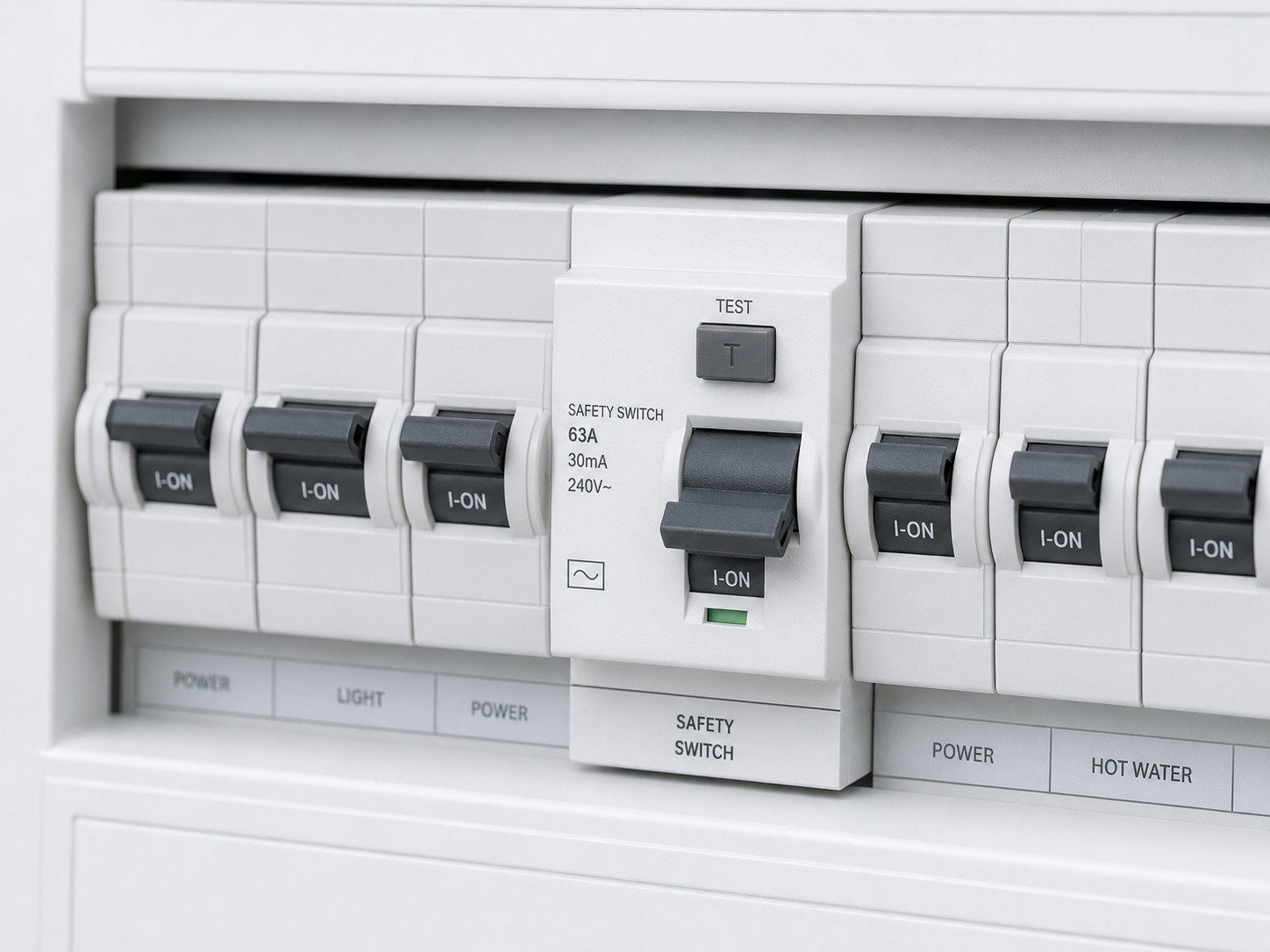
If you want to know which safety devices your board should have, read our guide to RCDs, circuit breakers and surge protectors.
Managing Electrical Load and Peak Demand During Extreme Heat
Peak demand is the moment everyone switches on at once, usually late afternoon on a hot day. That is when the grid strains and your own circuits do too. Managing it well is less about willpower and more about knowing what your circuits can actually carry.
Understand what a circuit can carry
Every circuit in your home has a rating set by its wiring and breaker. A circuit is overloaded when the combined current of everything plugged into it exceeds that rating for long enough to heat the wiring. The breaker then trips to prevent the cable from overheating.
You do not need to do the maths yourself, but you should know the warning pattern: if the same breaker trips whenever the air conditioner and the kettle run together, that circuit is at its limit.
Spread the load deliberately
- Run the dishwasher, washing machine and dryer early in the morning or late at night, not in the late-afternoon peak.
- Avoid running the oven, the air conditioner and the dryer on the same circuit at once. If they share a circuit, stagger them.
- Keep high-demand appliances off during the hottest part of the day where you can.
- Set the thermostat a little higher and use fans to move air, every degree of cooling you avoid is current the circuit does not have to carry.
- Plug high-draw appliances such as portable heaters, kettles and microwaves directly into a wall outlet, not into a power board shared with other devices.
A common mistake is plugging fans, chargers and a portable cooler into one power board. That is how power boards melt and start fires. Read about the dangers of overloaded power boards before you add another fan.
When to have capacity assessed
Book an electrician to assess circuit capacity if any of these apply:
- You are adding a new air conditioner, ducted system or large appliance.
- The same breaker trips repeatedly during hot weather.
- Your switchboard is old, has ceramic fuses, or has no safety switches (RCDs).
- You rely on extension leads or power boards for everyday appliances.
An electrician can confirm whether a dedicated circuit is needed, whether the switchboard has spare ways, and whether the main supply is adequate for the load you are asking of it. Doing this before summer is far cheaper and safer than doing it after a failure.
For the broader picture on reducing demand and bills, see our guide to energy costs and demand management.
What to Do During a Power Outage in a Heatwave
An outage in extreme heat is uncomfortable, but it is also a safety event. Stay calm and work through the basics.
First, switch off your air conditioner and major appliances at the wall. When power returns, the surge can damage them (Electrical emergencies). Then:
- Keep the fridge and freezer closed to hold the cold in.
- Use a torch, not candles, to avoid a fire risk.
- Check on elderly neighbours and anyone with medical needs.
- Keep drinking water handy for people and pets.
Outages and restarts bring surge risk, so it helps to understand what causes electrical surges and how to protect your home. If the outage stretches on, follow our steps for preventing food spoilage during outages.
Safe Backup Power: Generators and Battery Systems
Backup power keeps the fridge and a few lights running, but only if it is set up safely. Get this wrong and you risk carbon monoxide poisoning or a shock.
Follow these rules:
- Never run a generator indoors, in a garage or near a window (Carbon monoxide poisoning factsheet).
- Plug appliances straight into the generator, not into house wiring.
- Let the generator cool before refuelling.
- Have a battery system installed by a licensed electrician, not DIY.
A battery backup needs the right circuit and changeover switch to be safe. That is a job for a qualified tradesperson.
Book a Licensed Electrical Safety Check Before Summer
A licensed electrical safety check is the single best thing you can do before the heat arrives. An electrician can test your switchboard, check the wiring and confirm your safety switches work.
At Air Conditioning & Electrical, our fully licensed technicians handle electrical and air conditioning work. We are an approved installer under the NSW Government’s Home Energy Saver loan program, with 0% interest finance options via Brighte.
Do not wait for the first hot day. Request a quote today and have your home ready before summer.
Frequently Asked Questions
Can extreme heat cause electrical problems at home?
Yes. Heat raises resistance in wiring and makes circuit breakers and switchboard components work harder, especially when air conditioners run for hours. Cords and older wiring can overheat, and demand spikes can trip circuits or, in worse cases, damage insulation. Watch for warm power points, a burning smell, flickering lights or a switchboard that trips repeatedly. If any of these appear, stop using the circuit and have a licensed electrician inspect it before the next hot spell.
How do I know if my switchboard is overloaded?
Common signs of an overloaded switchboard include breakers that trip when several appliances run at once, lights that dim when the air conditioner starts, a buzzing or warm switchboard, and scorch marks or a burning smell near the panel. Older fuse boxes with ceramic fuses are also a warning sign. These point to circuits carrying more load than they were designed for. A licensed electrician can test the circuits and recommend whether an upgrade or dedicated circuits are needed.
Is it safe to run air conditioning during a heatwave?
Yes, provided the system is in good condition and on a circuit that can handle it. Have the unit serviced before summer, clean or replace air filters, and check that the outdoor unit has clear airflow. Air conditioner electrical safety matters most when units are old, have damaged cords or are plugged into overloaded power boards. If the system trips the breaker, smells hot or struggles to start, switch it off and book a qualified technician rather than resetting the breaker repeatedly.
What should I do if my power goes out during extreme heat?
Switch off and unplug sensitive appliances so they are not hit by a surge when power returns, and leave one light on so you know when it is back. Keep a torch, batteries, battery-operated radio and drinking water handy, and check on pets and anyone who is medically vulnerable. Move to the coolest room and keep windows and blinds closed during the day. Never run a generator indoors or in a garage. If the outage is prolonged, follow your utility’s alerts and consider a battery backup for essential equipment.
Your switchboard should not be the weak point in a heatwave. Book a licensed electrician to check it now, and let Air Conditioning & Electrical keep your home safe and cool all summer. Get started with Air Conditioning & Electrical and get a quote today.
